• How to Study the Bible
      • Start here if unsure.
      • Free Resources
      • Studying the Bible
        • How to Think Like a Bible Character
        • Biblical Scholarship Around the Globe
        • Biblical Theology vs Critical Scholarship
      • Languages
      • How to Study in Europe (Master’s and PhD)

Leslie Flores

  • More Energy to Grow

    August 17th, 2020

    A few weekends ago, I woke up one Saturday, and, after spending essentially 5 months confined to my bedroom, I just felt like my space wasn’t a haven anymore. It felt more like a jail cell. Lockdown was hellish, and my bedroom needed refreshing.

    Fortuitously, my house is located just down the street from a pretty big garden center, and so I’ve spent the last few weekends picking out the perfect plants for different ledges and corners of my room. I went from having four plants to now owning ten, from tiny ones to a couple majestic mid-size tropical plants atop my dresser. And through the process, I’ve unexpectedly discovered a new hobby in tending my plants.

    It appeals to so much of me, in my temperament and interests, from the etymology of the name and the plant’s origin, to the scientific classification and other botanical information, to learning the best way to water them, and watching them grow or respond to the sunlight. One in particular is called a prayer plant because it lifts its leaves at night, and it always reminds me to pray when I see it tucked in for the night.
    61858517884__daee9f45-2e97-4874-a5fd-f8d32644c1b2
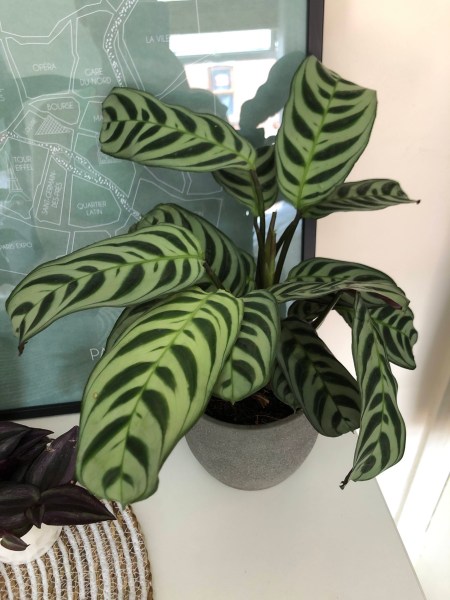
    Peacock plant, or Ctenanthe burle-marxii

    In the midst of learning something new, which always excites me, I heard a plant-lover on YouTube casually say of a new plant that she would trim off some yellowing or damaged leaves so that the plant can use more energy to grow and unfurl some new leaves.

    The plant in the top photo, my marble queen pothos, had a good few damaged leaves, just from bringing it home from the nursery, and later some sun damage that was my fault. I have meticulously, almost prayerfully, meditatively, pruned those damaged or yellowing leaves off the plant, and it looks so much better, to my surprise. And the new crinkly leaves that are starting to uncurl will now have a better chance to grow, and to bring new, fuller growth to the plant.
    img_5456
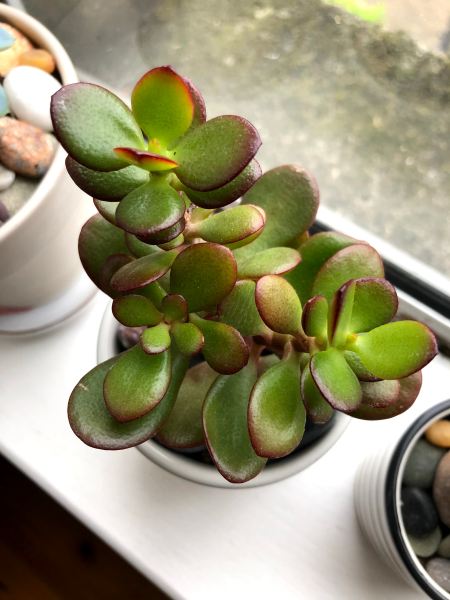
    Jade plant, or crassula ovata

    But this pruning and watching new, slow growth and change reminds me so much of life right now, and of one of my favorite passages of scripture, John 15.

    Every branch that bears fruit he prunes to make it bear more fruit. …Abide in me as I abide in you. Just as the branch cannot bear fruit by itself unless it abides in the vine, neither can you unless you abide in me. (vv. 2b, 4)

    Honestly, lately I find it hard to focus deeply on studying Scripture: my ability to concentrate comes and goes, which is hard for me as an academic. And I need the external reminder of my prayer plant, and even still sometimes I forget or just can’t pray much because of the pain. My prayers usually contain two, three, or four words, when I do pray.

    My life has been pruned back majorly because of this pandemic. It’s lonely. So many of my close friends have moved away and my social circles have shrunk dramatically. I went through a devastating breakup in the middle of lockdown, which compounds every other sense of loss or grief that I encounter. And on top of all of that, I don’t know when I will be able to go safely back to the US to see my family without having to spend four weeks total in quarantine–something I am eager to avoid after the experience of lockdown. I’m not even sure I could afford to go on a vacation, which I am dying for. 

    I take it one day at a time and try to laugh lots, and find the joy in the moment, but really I am not okay lately. I am always reminded of what I lost, constantly aware that my family isn’t here, and in a time when I need hugs the most, people aren’t hugging. It feels soul-crushing.

    I don’t know why my life got pruned back as dramatically as it did. Some leaves or vines were taking too much from my life, that is true. I have started growing in a new direction which is very exciting. But most of the vines that got cut back were really healthy.

    He removes every branch in me that bears no fruit. Every branch that bears fruit he prunes to make it bear more fruit. (v. 2)

    But now, learning what I have from my own real and symbolic experience with these beautiful, lush growing things, is that now whatever energy I have can help me grow more. I spend more time at home and less time out with friends, but I have a new hobby that brings me so much joy. I’m reading an exciting new biblical studies book and have new fuel for my own research. And the friends I’m left with here really are true friends, for which I am grateful.

    It doesn’t make it any easier or less painful. Going back to work, I can see not only my coworkers but the customers are also just crankier, more tired, more haggard. But the good news is we still don’t stop growing. And someday I’ll see what the vinegrower had in mind when He pruned my life back so drastically. I have no other choice but to grow in what I do have, and this blog is a start. I haven’t blogged in more than a year. Look, a new leaf!

    I am the vine, you are the branches. Those who abide in me and I in them bear much fruit, because apart from me you can do nothing. 
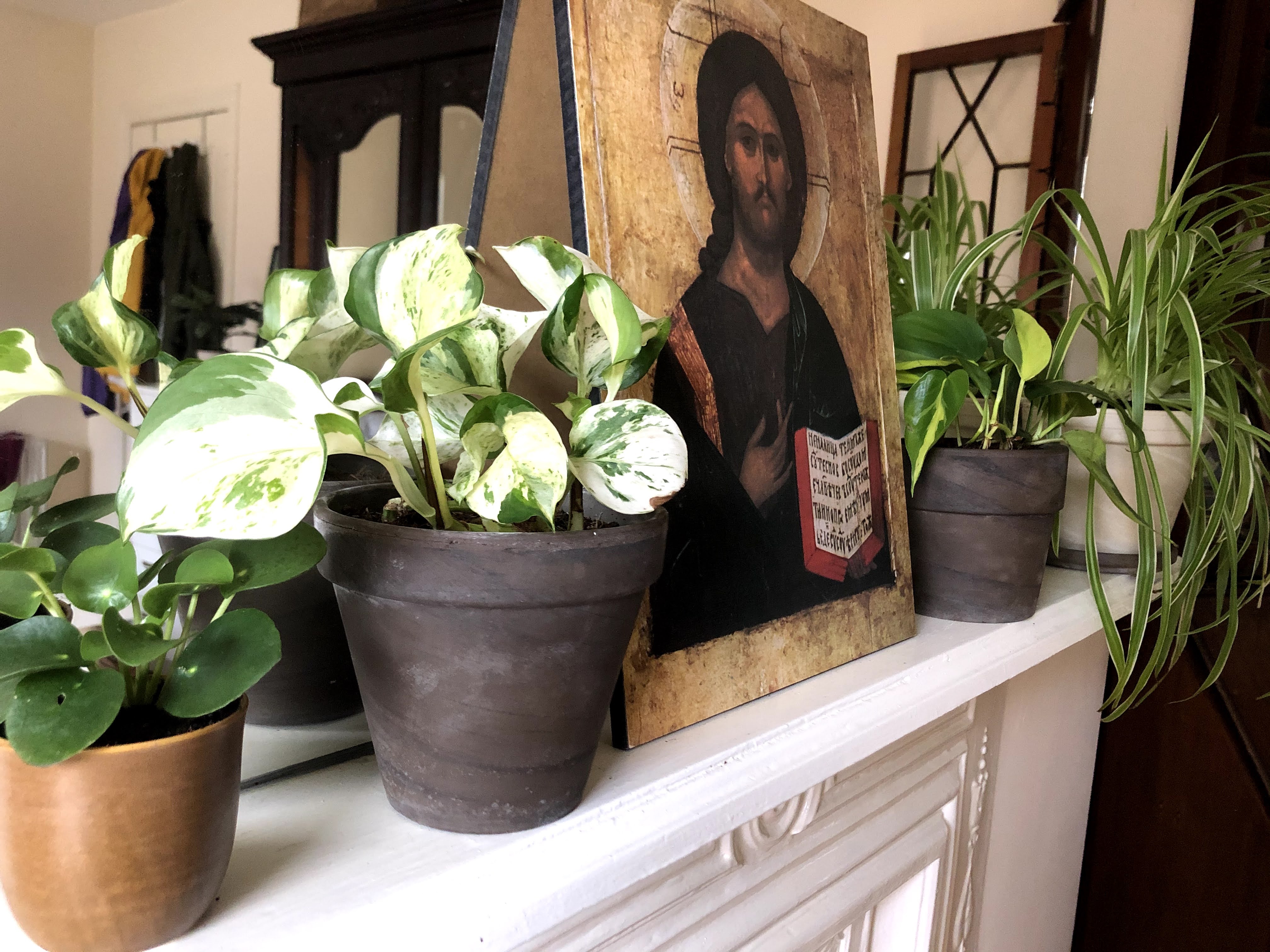
    img_5453
    Chinese money plant/missionary plant (Pilea peperomioides), marble queen pothos (Epipremnum aureum), Icon of Christ the Teacher, Philodendron brasil, and my friend’s spider plant
  • In Defense of Friendship

    June 16th, 2019

    Recently I was describing to a friend my story of how I went through some seasons of deep loneliness, and I told him that until last year, it had been at least a decade since I’d had a best friend. Surprisingly, he stopped me and asked me what did I mean by best friend?

    I started to describe my outdated and immature idea of a best friend, or maybe simply too shallow: someone who makes me laugh more than anyone else, someone I can tell everything to… But I’ve been thinking about what a true friend is for. What really is a best friend?

    cappadocians

    There are two old dead guys, really famous ones, who make up two thirds of the group we theologians call the Cappadocian Fathers. They were important early theologians, and so both the Eastern and Western Church recognize them and refer to them. Two of them were called Gregory (One of Nyssa, one called Nazanius), and another one called Basil the Great. Gregory of Nyssa and Basil were brothers, but Gregory Nazanius and Basil were each other’s anam cara.

    For those of you who may not know any Irish, for the sake of clarity, here I will translate it as “soul friend,” although most often when referred to in English people say “soul mate.” This term actually comes from early Irish Christianity: a soul mate is someone who carves you into the person God made you to be. (See: Proverbs 27:17). Once when I was on a retreat to a Franciscan friary, a friar named Brother Richard explained to us that sometimes you marry your anam cara, and sometimes you don’t. It’s not necessarily tied to the person you will be with.

    Gregory Nazanius said of Basil that they were so close, they seemed to be two bodies with a single spirit. What a beautiful thing it is to find such intimacy in friendship. I think in our society, and in church, we put marriage on a pedestal so high that we forget the importance of straight up friendship.

    I spent many years living in the middle of nowhere, isolated in many ways. In the process, it deepened me into the theologian I am today. Boredom birthed some beautiful and enduring things in me. I became self-sufficient and independent. But we’re not meant to be independent, are we?

    The pain that losing friendships causes is one of the most devastating things in a person’s life. I’ve lost friends so many times either because I moved away or because of other more painful things. This can cause such deep psychological wounds that eventually you realize that you’ve built a wall around your heart, which only reinforces your isolation.

    But the opposite, the kind of bond you can have with a friend that’s filled with the agape love of Christ is the most potent force in the world. Oftentimes we acquaint intimacy with sex, but intimacy is not limited to that.

    I have one such friend, one who sends me into fits of childish giggles in church. One who sometimes speaks in incomplete sentences because I know what he means without words. One who cleaned up after I got carsick and threw up and felt humiliated, but never once gagged at the smell. One who makes me spitting mad because he’s poking his fingers in old wounds that need to heal.

    When you have a friend who loves you and not only wants the best for you, but wants the best for the Kingdom, that person will reshape you. Your anam cara will make you look more and more like you, painfully carving away from you the parts that shouldn’t be there, and lovingly smoothing out and polishing the best parts of you, until you gleam in more and more imitation of Jesus.

    This is what a friend is for, and finding friends like this is worth more than gold.

  • When Jesus is Late

    June 3rd, 2019

    I’ve been reflecting a lot lately on my expectations for my life, and how so much of my life now is simply unexpected, it’s not how I imagined it. It’s not bad, I wouldn’t change it, I’m in a really good season right now. But it’s just not what I expected.

    For instance, the realization that I will more than likely–unless something dramatic happens in the next six months–not marry in my twenties is something new and unfamiliar. The thought of navigating my life as a grown-up without a life partner, the thought of beginning my academic career as a single woman and publishing under my maiden name–all of it is a bit daunting. There is a new type of longed-for stability I’m finding in my life, but I’m also beginning to see a new decade of uncertainty begin to uncurl before me, like a fern frond.

    I was thumbing through my journal, reading my thoughts from nearly one year ago, and I wanted to share this with you. I wrote it when I was on vacation in Sweden. It’s about Jesus’ close friendship with two women–Mary and Martha–and their experience of what happens when Jesus is later than we expected.


    27 July, 2018

    Hälsningar från Sverige! I’m outside on Maddie’s mom’s balcony, it’s like 80°, I’m in the shade, there’s a nice breeze coming through the trees. I am so relaxed. So happy.

    John 11:40 NRSV – Jesus said to her, “Did I not tell you that if you believed, you would see the glory of God?” 

    This is from the raising of Lazarus, when everyone doubted Jesus – He came too late, He wasn’t powerful enough to save him from death, all these things. Jesus’ relationships with Mary and Martha were so individual and special. He let Mary anoint His feet and wash them, so intimately. She loved Him so much. And he had such an affirming, teaching conversation with Martha. She trusted Him too, just like Mary.

    John 11:21-22 NRSV – Martha said to Jesus, “Lord, if you had been here, my brother would not have died. But even now, I know that God will give you whatever you ask Him.” 

    Despite bitter disappointment, Martha still submitted humbly to Jesus’ authority, trusting that she would see God’s glory. Trusting Jesus completely, she saw her expectations far exceeded. The upset, the weeping, the disappointment that Jesus didn’t save Lazarus from dying was totally worth the better, more glorious plan God had in mind for her.

    I feel that “lateness,” that disappointment. The place I find myself in in my life now is so strange and different from what I thought it would be. But despite the disappointment–singleness, joblessness–I still trust and submit to Jesus. He is my intimate friend and I know God is pleased with me through Christ. I entrust myself to Him fully.

    When it seems like God is late, when He’s delaying, He’s actually already arranged to maximize His glory in the situation. My life is to be about squeezing out every last drop of God’s glory. It always has been. I didn’t choose a path that would be a normal career path. The demand for theologians is nonexistent, career-wise. But in the Kingdom, I’m an important part of the Body, and I have to fulfill my purpose, faithfully, joyfully, so the Body can function. God is taking care of me.


    What I think is the most beautiful part of the story is not simply that Lazarus was raised from the dead, but that Mary and Martha, in the midst of their pain, they knew Jesus, and they loved Him, they trusted Him. They were able to step out of the pain that could’ve incapacitated them, that could’ve wounded them and broken their hearts, and they let Jesus bring forth what He had already planned–to maximize His glory.

    Don’t you think that when Mary and Martha saw such an unbelievable sight–their once-dead brother now alive again–that they were grateful they trusted Jesus even in their disappointment, even in the midst of confusion and pain so great it was even hard to breathe?

    Maybe Jesus isn’t late, but He’s simply asking us to wait. He wants to show His glory in our lives.

  • Are You Dehydrated?

    May 6th, 2019

    O God, you are my God, I seek you, my soul thirsts for you; my flesh faints for you, as in a dry and weary land where there is no water. (Psalm 63:1)

    A couple weeks ago I had a moment where I felt like I couldn’t catch my breath, spiritually and mentally speaking. Mid-April my mom was here for a week, for my graduation, and then three days later I was working in a new full-time barista job.

    I was so tired, mentally, physically, emotionally, that I had to drag myself to my trial at the cafe that Tuesday, and I was really wishing I could just stay at home and be immobile all day. So in the mornings when I would wake up in the 5 o’clock hour to be ready for work on time, I struggled to balance everything and found myself with very little time to read my Bible or pray, and I just felt so thirsty for a few days. It was like torture.

    But I remember one day walking to work, listening to a worship song and lamenting the fact that I didn’t have enough time with God that morning, and I thought, “No, I can’t take it anymore,” and so I switched the song in my headphones to a really inane Swedish pop song, the latest bop that had caught my attention. It was like candy for my ears, and instantly I forgot about that feeling of spiritual hunger that was plaguing me.

    In that moment I was saddened by how quickly I was distracted from my true thirst, and amazed at how in that moment, I felt better. It was like eating sweets when you’re properly hungry: for a moment it gives you a high, but it wears off quickly, and you’re still left hungry.

    sharon-mccutcheon-522851-unsplash

    Are you dehydrated? Are you thirsty in your soul? And what are you using to distract yourself from that thirst? Watch yourself: in your moments of spare time, what do you resort to to fill it? In those quiet moments, especially first thing when we wake up, or right before bed, that’s when we are most vulnerable and exposed: mentally, emotionally, and spiritually. Do you reach for your phone, or do you reach for God?

    Fight for those moments, those precious moments when nothing else is vying for your attention, invest in them as moments devoted to God. Even the shortest prayers, the briefest moments, can reform us bit by bit, until we can no longer go through the day without constantly reaching out to Him.

    In the same Psalm, David speaks of the satisfaction we find in God, even in the most barren wildernesses of our lives:

    My soul is satisfied as with a rich feast, and my mouth praises you with joyful lips when I think of you on my bed, and meditate on you in the watches of the night; for you have been my help, and in the shadow of your wings I sing for joy. (vv. 5-7)

    Maybe whatever is calling to us from our smartphones seems delightful in the moment, but it brings no lasting satisfaction. Only God can fill us, and it’s time that we tune into our spiritual thirst, and turn to the only one who can quench it.

  • My Friend KK

    March 15th, 2019

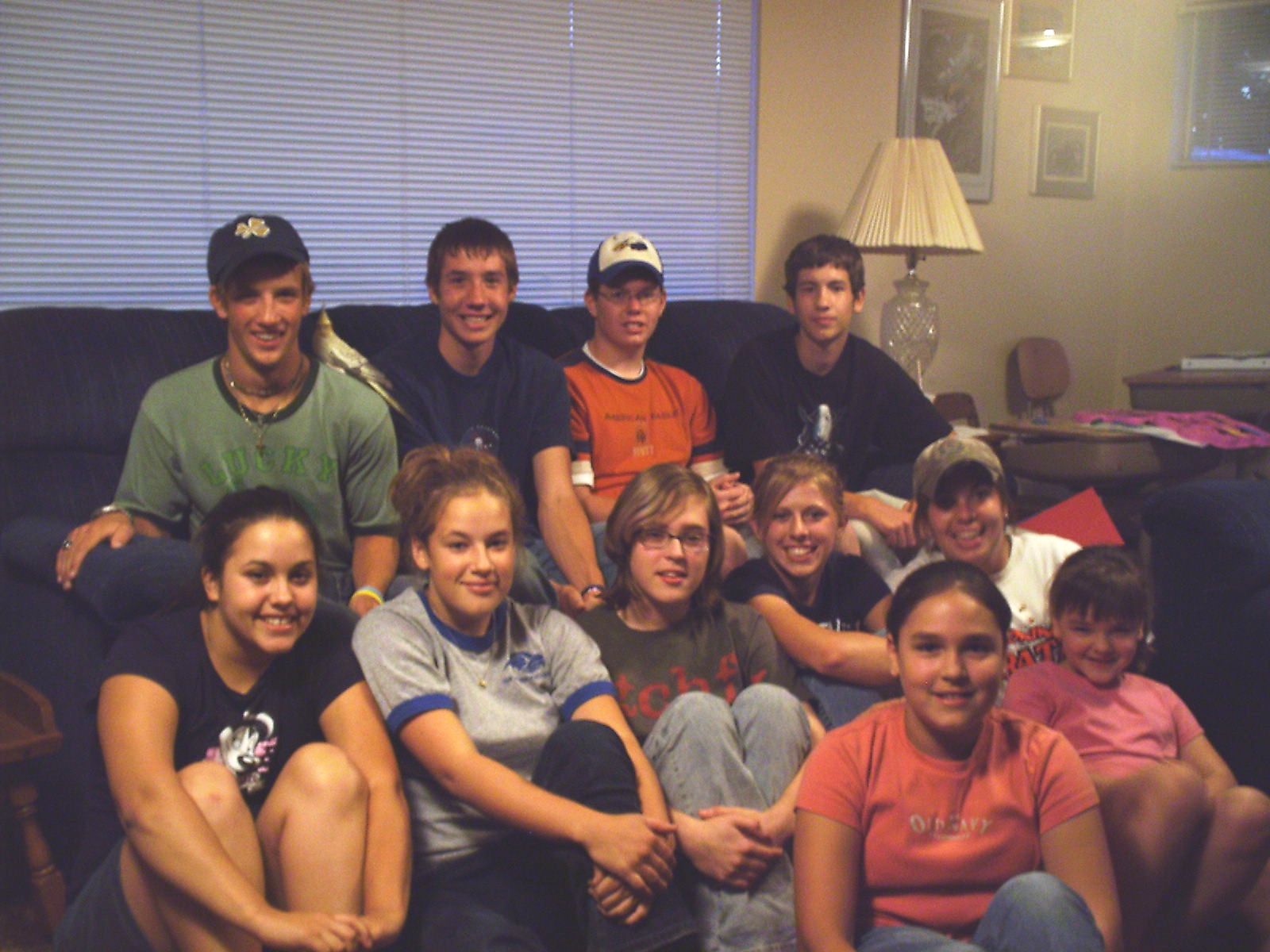
    In the summer of 2005, in Soap Lake, Washington, I met Kaylyn Bossert.

    I was fifteen, she was sixteen. She was dating my friend Collin, but I hadn’t met her yet, because she was from the next town over, another tiny town called Ephrata. We were at Collin’s house one summer night, chilling in his backyard. The sun had gone down, so we were jumping on his trampoline under the stars, hanging in a hammock under the stars, laying on the grass under the stars. It was so dark out in his huge back yard, so we found each other by voices.

    Someone brought her over to finally meet me, and when she shook my hand I heard a voice so warm, and deeply kind say to me, “Hi, I’m Kaylyn.” Her voice just dripped with love in a way I had never experienced before.

    IMAG0013
    KK on the bottom right, in a baseball cap. This was in 2005 in Soap Lake, shortly after I met her.

    I started going to her youth group at Ephrata Foursquare Church, and it was the best time of my life, finally having Christian teenagers around me as friends. Living in Soap Lake, population of approximately 1,000, meant that we had no youth group at my church.

    While she was still in the stage of my life of being “Collin’s girlfriend,” I remember one night she stopped me after youth group, and said to me in the sweetest, most earnest voice, “Leslie, when we get to heaven and we’re worshiping Jesus, can I stand next to you?” I was so taken aback by her boldness and by her absoluteness about the imminence of heaven. I said yes. After all, who asks that kind of a question? I couldn’t say no.

    And so that night, while everyone else around us just talked and laughed, we knelt together on the floor of EFC, in the aisle between some chairs, and she clutched my hands strongly in hers, and we just prayed together, sealing the moment. I’ll never forget it.


    The last two weeks have brought me a new kind of pain that I have never experienced before, because two Thursdays ago I learned that my special friend KK had suddenly died in a car crash. She was 29 years old. I’m so glad that I got to see her on my birthday when I was in Moses Lake for Christmas. She was the happiest she had ever been. We talked about her finally fulfilling her dream of coming to Ireland to visit me, and she said she might come for my graduation next month.

    IMG_8880
    July 2017, our last picture together.

    KK was an absolute treasure. She was my oldest and dearest friend, and even though we’d go sometimes years without talking, we still had such a strong and deep bond. Every time we talked, she would ask me, “What is Jesus teaching you?” She always got right to the heart of what really matters in life. She truly taught me so much.

    Her friendship was a gift, and I am so grateful I was able to call her my friend, the sister of my soul. And now I know she is saving me a space next to her in heaven.

    I miss you, KK. I will see you again.

  • Where is Home?

    December 8th, 2018

    Lately I have found myself faced with the same problem, and it’s my own fault.

    For the years that I was in Moses Lake, I had no social life, and that was rough. So now that I am here in Ireland, surrounded by so many friends and so many opportunities to hang out, I keep trying to forget the fact that I am an introvert and I don’t function well if I don’t get enough alone time. It’s kind of funny, and it’s a good problem to have, but I’m rediscovering for myself the importance of retreat from the world.

    But what made me a little bit sad recently was when I realized that I had been forsaking my friendship with Jesus. I was reading my Bible in the mornings, thinking that was sufficient. But I was forgetting to pray, and I don’t mean asking Him to take care of my prayer requests, but simply being in His presence. This is the essence of what prayer is.

    In Matthew 6:6 Jesus instructs then us how to truly pray:

    But whenever you pray, go into your room and shut the door and pray to your Father who is in secret, and your Father, who sees in secret, will reward you.

    This verse, of course, gives us the idea of a “prayer closet,” and certainly a private and quiet place is important for the spiritual life. But what if Jesus wasn’t telling us literally to go pray in our bedrooms and close the door behind us? Perhaps He is talking about a different kind of room, a Home that has nothing to do with where we are, physically.

    Four-Room-Israelite-House
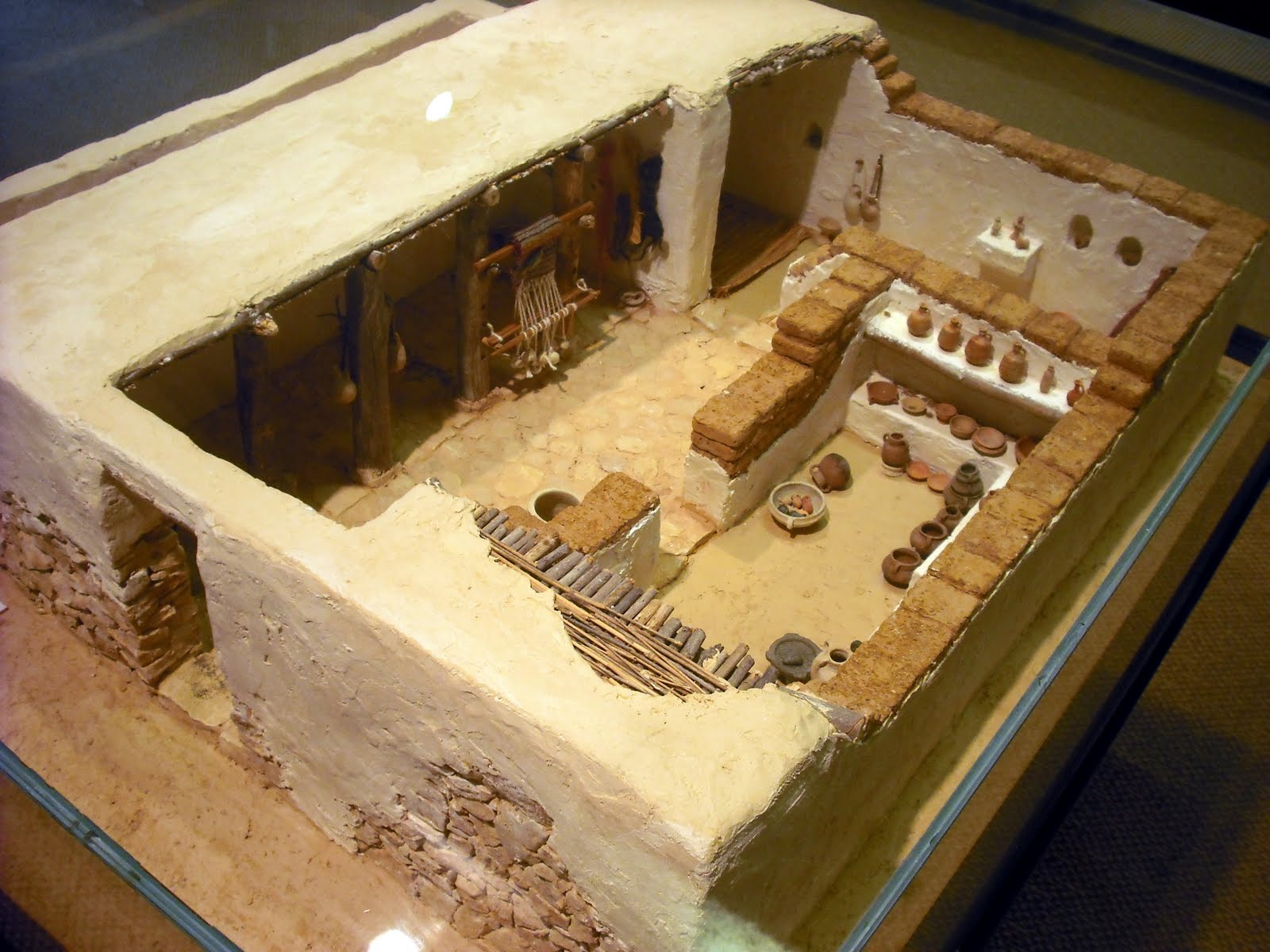
    Typical Israelite House. Photo source.

    As you can see in the photo above, Israelite houses essentially had one space: for cooking, sleeping, working–everything. So it wouldn’t be possible to find the kind of privacy in an Israelite house which we can easily find in our own homes.

    So what did Jesus mean when He told the Israelites that they were were to go into their rooms and shut the door? We should remember that Jesus’ words always have a deeper meaning.

    When Catherine of Siena was told by her parents that she could no longer lock herself in her bedroom all day to pray, she eventually learned that she could still retreat, not into her room, but into the secret inner room of the heart. 

    This is what Jesus was referring to.

    In the year I was in the US, before I moved here, I was so uncertain whether I would make it back here or not, and Jesus was the only certainty I could cling to, so in that season I would spend hours on the couch, soaking in His presence. I didn’t realize that I was cultivating a Home to dwell in.

    When I came back to Ireland for a visit in early 2017, and I had a strange feeling of detachment from the place. I had previously thought that being in Ireland would finally  make me feel content and at home, because surely, fulfillment comes from doing what God called you to do? But in actuality, in all my quiet times with Jesus, I had discovered that my Home is where the Spirit is.

    Our Home is our relationship with Him.

    I have been so homesick and lonely lately, it’s awful. But when I curl up on the couch at the end of the day to pray, I have been so grateful to have the constant friendship of Jesus to keep me company, when my friends are asleep in their own beds and my family is so far away.

    It is so important for us to cultivate this inner Home in our hearts, where we can dwell with Jesus. When we retreat and spend time with Jesus, we close the door to the outside world: to distractions, to worries, to busyness, even to good things like friends or family.

    Life is crazy, and the only constant for us is change, but we have a God who’s name means “I am.” He IS. He is the same yesterday, today, and forever, and He is our Home. So in this season that can be extra difficult, extra lonely, extra homesick or extra stressful, don’t forget to go Home. He is there, waiting for you. Light the candle of your heart, and don’t let the flame go out.

  • Maybe I should buy a houseplant…

    August 27th, 2018

    I never thought that considering to buy a succulent would be such a momentous decision in my life. But neither did I think that settling down would come so gradually. I always thought I’d finally be able to settle down once I got married, and it would be sudden and definite. Slowly this summer I’ve come to realize that I actually am, at long last, settled.

    When I was in bible college I heard the words “nesting instinct” for the first time, and realized that my desire to have my own things and live in my own house had a name. And simultaneously I realized that I had to switch off that instinct indefinitely, because I knew that I needed to pursue a life in Ireland.

    So all my books went on Kindle, and anything else that wasn’t immediately necessary or useful, I wouldn’t buy. I stopped adding to my beloved record collection, and a trip to a thrift store or a Marshall’s would twinge my heart to see lovely things to decorate a house or room with.

    Between graduating college in 2012 and moving here in 2017, I lived in my old room from when I was a teenager. Although it had a bookshelf and a few other things, it felt stark because never updated the decor. I had my Lord of the Rings poster, an Irish flag, and a borrowed plant from my sister, but it didn’t feel like my room anymore. At best, it felt a bit like a monk’s quarters; at worst it felt like a prison I’d never leave.

    2013
    Me in 2013, my Irish flag in the background.

    This September 8th marks the one year anniversary of my arrival in Ireland, which is a huge deal. I haven’t been in one place for a full year since October 2013-2014, and since 2010 the longest I’ve spent in one place is a year and ten months.

    Throughout my twenties, the only constant in my life has been change, and it’s been so painful. I needed to be able to pack my life into my three duffel bags, because that way I was able to easily move to Ireland when I needed to be here. But while many an adventurer would claim that type of lifestyle is freeing, it actually was suffocating to me.

    This summer I realized just how much all the back-and-forth affected me. I didn’t accumulate belongings, but I did accumulate callouses around my heart. It grieved me to watch it happen. I love people: love my friends, love making new ones, but I stopped letting people in all the way. Why would I, if I was just going to move soon anyway? Too painful.

    Every time I had to leave Ireland it made me cry.

    As my one-year mark approached, despite knowing that I’d be staying here, I began to feel myself pulling away mentally, getting ready for my heart to tear again. I was starting to get prickly.

    It was my self-sufficiency and independence that enabled me to fight for my dream of living in Ireland, and I finally made it. But it also prevented me from being able to have fulfilling friendships. It took a season of desperation and tight finances this summer to realize just what treasure I have in my friends here. This summer I learned to ask for help, which is something I have never done in my life, and I had to start with tiny things that felt like mountains, like asking for sunscreen, or accepting someone’s offer to buy my lunch.

    I always knew my friends would be there for me in hard times, but this summer I had no choice but to rely on other people. Now I’ve learned that it’s okay to have one bad day after another, to feel really weak and to rely on the strength of others who love me.

    Once I was able to just let go like that, I see that it’s the people here who create the home for my heart. That keen longing to settle down was never about decorating a house, but what settling down represents. Like a houseplant, now I have space and time for stability, growth, slowness, the mundane.

    If I can buy something with roots, then maybe my heart can start to grow some roots too, at long last.

  • Psalm 23: The Thrill of the Chase

    June 25th, 2018

    One of my favorite TV series is called Grantchester. It centers around Sidney Chambers, a young vicar in 1950’s in the village of Grantchester, near Cambridge. He buddies up with the local police detective, Geordie, and, through his special insight into the human heart and his position as a trusted man, he helps solve crimes around the area.

    It’s a marvelous show, full of heart, and I really only watched it because I felt like Sidney was a real person; never have I cared so much for the welfare of a fictional character!

    The final shot of the pilot episode shows Sidney and Geordie strolling through a lush, summery field, followed by Sidney’s new puppy, Dickens.

    sidney and dickens

    As you would with a new puppy, Sidney calls out for him to stop sniffing around and to keep following him.

    As adorable as it is, pastoral as the imagery is, this is what I used to have in mind when I read Psalm 23:6 (NRSV)

    Surely goodness and mercy shall follow me all the days of my life, and I shall dwell in the house of the LORD my whole life long.

    When it says God’s “goodness and mercy shall follow me,” I imagine them following me in a bumbling kind of way, tagging along, distracted, something I always have to turn back to call, “Come on! Keep going! I’m walking this way, follow me!” Puppies are cute, but they’re untrained and it can be agitating to have to constantly direct them.

    That changed a few weeks ago when I was doing some Bible study, looking into the original Hebrew of this psalm. I was struck by three words in this verse:

    1. Surely
    2. Mercy
    3. Follow

    Unfortunately, sometimes the English loses much of the original meaning, and the word follow in Hebrew is much more intense; it should actually be translated as to chase or to pursue!

    How much of a difference does it make knowing that God is actually pursing or even chasing you with His love and goodness? I don’t have to call behind me, to remind God’s love to keep following me. “Come on! Don’t get distracted! COME ON!” I’m certainly glad that God’s love is behind me, pursuing me, rather than carelessly tagging along like a puppy.

    The word mercy is a highly important Hebrew word, called hesed. (It would be translated agape in Greek.) The short translation is steadfast love or covenant loyalty, but it is such a densely-packed word, full of meaning. My favorite preacher, David Platt, defines it this way:

    This is a uniquely divine love. This is not a man manufactured, man created love. This is love that flows from God toward his people. …There’s a picture of divine love, compassion, loyalty, kindness, goodness, mercy, grace, all wrapped up into one.

    It’s such an important, heavy word that a new term had to be invented for it: in the KJV it is translated as lovingkindness. This is the loving, eternal faithfulness of God, and not only does it follow us, it pursues or chases us our whole lives long.

    Lastly, the word surely is more than simply an emphatic word affirming the rest of the contents of the verse. Your bible may even have a footnote for this one: the word surely can actually be translated as only.

    There is so much packed into this one verse. It is not just “mercy” which pursues and chases us, but God’s unfailing love; His faithfulness, His kindness, His unbreakable loyalty to us; all through Christ, who was descendant of the David who wrote this psalm. What a relief it is to know that I don’t have to call behind me, to remind God’s goodness (or beauty in Hebrew!) and hesed to keep following behind me, to stay close.

    To know that only these things will chase after me reminds me that I have never been abandoned or forgotten about, even in times when it seems God won’t answer my prayers.

    You don’t have to do anything, friend. If you feel like your prayers are more like Sidney calling back to his pup, change your perspective. It is God who pursues us, it is God who calls us closer to Him as we seek Him in prayer, especially when His answers don’t look the way we thought they would.

    Take heart, because you are being pursued by a good God, the Good Shepherd, and He has never forgotten you. Let yourself lean upon His love, His hesed, because it is there for you when you are weak.

  • Heard it Through the Grapevine

    June 19th, 2018

    A wise friend once said to me that the Christian life is like trying to climb up the downward escalator: if you don’t keep climbing, you’re going to move down; there is no sitting still in the Christian life.

    How do we keep climbing, then? Is it through the actions of prayer and bible reading, or through fasting? It’s actually much deeper than that; it’s about abiding.

    Abide in Me

    At its heart, fasting is replacing food during mealtimes with prayer and Bible reading. It is a deeper form of what should be our daily devotional time with Jesus. And our daily time with Jesus causes us to abide in Him.

    Abide in me as I abide in you. Just as the branch cannot bear fruit by itself unless it abides in the vine, neither can you unless you abide in me. I am the vine, you are the branches. Those who abide in me and I in them bear much fruit, because apart from me you can do nothing. John 15:4-5 NRSV

    The word “abide” means to remain, to continue, to endure.

    There are many days when John 15 is all I read, and it is all I need. I return to it over and over in the mundane and the routine. The more I ponder it, the more it nourishes me.

    How does fruit grow? Jesus gives an example of a grapevine. It is almost a silly question: the fruit lets itself be nourished by the vine; it abides, or remains, in the branch, and all the nutrition and water it needs will come to it. That is all it takes, and in some ways, the branch does nothing, but it abides.

    The Discipline of Abiding

    Christian life is not a matter of doing, but of being. This is what it means to abide in Christ, to abide in His love. It is an intimate connection to the life-giving Vine of Christ. If we disconnect, we die. Beyond the cultivation of healthy spiritual discipline (fasting, prayer, Bible reading), our goal is to be in constant fellowship with God throughout the day. In other words, to pray without ceasing (1 Thessalonians 5:17).

    The spiritual nutrition we need, to live and to produce fruit, is the love of God. He is our Source, and we must abide in Him. It is the only way for us to thrive, for us to keep climbing upward toward heaven.

    So think of fasting as holistic abiding; body, mind, and spirit. Fasting brings an outside-in and then inside-out transformation: we begin with a sacrifice in our bodies (fasting), which causes us to strengthen our willpower (using our minds) to choose Christ over food, which makes us more aware of our deep hunger for God’s love. As our spirits are nourished by His love and presence, He renews our minds (Romans 12:2), gives us His peace (Philippians 4:6-7), and this in turn gives life to our bodies!

    A tranquil mind gives life to the flesh, but passion makes the bones rot. –Proverbs 14:30 NRSV

    When fast, we sacrifice something good right now in order to receive God’s best for our lives. And the more we abide in His love, the more we see that God’s way really is the best. We begin to crave Him like we crave air.

    As It Is in Heaven

    We enter a heavenly way of being when we simply abide. Heaven is not a goal, it is not something to reach and check off the list. It is the place where all time will be transcended and we will abide in God’s love perfectly and continuously.

    When we choose to abide we are letting God’s will be done on earth as it is in heaven. We make His name holy (hallowed) in ourselves first and foremost, presenting our bodies as living sacrifices (Romans 12:1). We must pattern our lives after heaven, not because it is the goal we will achieve, but because it is the end result of our lives in Christ.

    Abiding in Christ is a state of being, undefined by time, unhindered and unburdened. It is firstly by abiding, by BEING that we fulfill and enact God’s will, and not by doing or striving. Because He is the one who created time, He will be faithful to fill our days with things for His glory and our good. All other cares fall away when we re-center ourselves around the love of Christ. And in this simple way, we will produce fruit.

    My Father is glorified by this, that you bear much fruit and become my disciples. As the Father has loved me, so I have loved you; abide in my love. –John 15:8-9 NRSV

    (This is part three of a series on fasting. Part One is here, and Part Two is here.)

  • Fasting makes you HANGRY.

    June 12th, 2018

    Fasting, giving up food for a period of time in order to spend concentrated time with God, is difficult. This is why it is a spiritual discipline.

    It causes suffering. Why would I give up something so obviously good and needful as food? Yet we know as Christians we are in pursuit of something more, and nothing makes you quite as hangry as fasting. But when I say hangry, I don’t just mean the psychosomatic phenomenon of being cranky because your blood sugar is low. There’s a deeper kind of agitated hunger that we uncover through fasting.

    In Romans 12:2, Paul tells us

    Do not conform to the pattern of this world, but be transformed by the renewing of your minds, so that you may discern what is the will of God–what is good and acceptable and perfect.

    Fasting is in its essence a physical practice, but the discipline part comes through the renewing of our minds. In Greek, the word for mind is nous. This is different from the psyche, which includes our thoughts, our emotions; literally our psychology. The nous is, more specifically, the way of thinking, our free will in regards to our thought life.

    Growing ‘Trees’ of Life

    There is a scientific principle behind this spiritual reality of the renewing of the mind (nous). Dr. Caroline Leaf is a Christian and cognitive neuroscientist. She, in her research, discovered that our thoughts create physical neural pathways in our brains. The habitual negative thoughts we have create ‘trees’ of neurons in our brains, and the good news is, we can break down those thoughts and create new ‘trees’ of life, according to God’s word! (For more information, check out this excellent presentation, or read her book, Switch On Your Brain!)

    The process of this is slow and difficult. It is a discipline of the mind, and fasting creates a physical reminder in us to change our way of thinking. There is a reason why Catholics pray with a rosary: it is a tangible tool to help draw the body, along with the mind and the soul, into prayer and communion with God.

    When I first began fasting regularly, while still in the US, I would begin to feel painful hunger pangs in the late morning, when my body knew that breakfast was overdue. Hangry. Though my body was craving, my mind knew that my spirit was craving even more. So I would remind myself, as often as I had to, “I’m more hungry for Jesus right now than I am for food.”

    Eventually, through the mundane repetition of fasting once a week, a few months in, I no longer was hindered by morning hunger pangs. (This lines up with Dr. Leaf’s research, which says in order to create new, healthy thought-patterns, it takes at least 63 days.) When the pangs would return more strongly in the mid-afternoon, closer to twenty hours or so since I had last eaten, I would dive even deeper into communion with God.

    When I pressed into the discomfort I was feeling in my body, it caused me to cling even more to Jesus. The pain of hunger in my body made me more aware of the deeper pain of other unfulfilled hungers: a hunger to be living and ministering in Ireland, a hunger to one day be married and have children, and deepest of all, a hunger to know God more. It’s as if the hungrier my body felt, the more I realized the hunger I had for God.

    Theosis: Becoming Like God

    When we use our free will to choose with the mind to submit ourselves to God, as a living sacrifice, we are slowly transformed into His image, just as Paul wrote about in Romans. Orthodox Christians have word for this: it’s called theosis, or the process of becoming like God.

    At its basic level, fasting makes you master your emotions when the ‘hanger’ grabs a hold of you; you are master of your person, not your emotions, and not your hunger. What you are cultivating, through this renewing of the mind, by the power of the Holy Spirit, is self-control. (See Galatians 5:22-23, the fruit of the Spirit.) You’re cultivating self-control over the impulse to eat, and by extension, self-control over how you gratify, or don’t gratify, the desires of the flesh. (See previous post for more in-depth talk about the flesh.)

    Those who belong to Christ Jesus have crucified the flesh with its passions and desires. If we live by the Spirit, let us also be guided by the Spirit. –Galatians 5:24-25 NRSV

    The passions of the flesh are ultimately a selfish desire for pleasure for pleasure’s sake. Through fasting, hunger for God grows in your spirit, and the worldly passions begin to slowly lose their hold on you. In the Orthodox tradition, this state is called apatheia, which means literally, freedom from the passions (pathos) of the flesh. Rather than a dull and uninspiring life, a life of apatheia is a life of ever-increasing freedom and satisfaction in Christ. Sin stops tasting so good when you’ve tasted the goodness of God.

    For me personally, fasting transformed me totally as a person at every level, from small victories over sugar cravings to coming to the realization that should God decide that I will never marry, I know I will always be deeply satisfied in Christ. After all, we’re not made to live forever in this world. Fasting should remind us that though we are hungry and in pain now, there is coming a day that we will be satisfied and whole, resurrected with Christ, in eternal, intimate fellowship in heaven. There is a divine Wedding Feast still ahead of us, and the more we grasp that, the lighter the troubles of this world seem.

    I consider that the sufferings of this present time are not worth comparing with the glory about to be revealed to us. Romans 8:18

    (This is Part Two of a series on fasting. Part One is here, and Part Three is here.)

←Previous Page
1 2 3 4
Next Page→

Blog at WordPress.com.

Privacy & Cookies: This site uses cookies. By continuing to use this website, you agree to their use.
To find out more, including how to control cookies, see here: Cookie Policy
 

Loading Comments...
 

    • Subscribe Subscribed
      • Leslie Flores
      • Join 68 other subscribers
      • Already have a WordPress.com account? Log in now.
      • Leslie Flores
      • Subscribe Subscribed
      • Sign up
      • Log in
      • Report this content
      • View site in Reader
      • Manage subscriptions
      • Collapse this bar