• How to Study the Bible
      • Start here if unsure.
      • Free Resources
      • Studying the Bible
        • How to Think Like a Bible Character
        • Biblical Scholarship Around the Globe
        • Biblical Theology vs Critical Scholarship
      • Languages
      • How to Study in Europe (Master’s and PhD)

Leslie Flores

  • A Brief Theology of Suffering

    December 28th, 2021

    I am sitting in the back of St. Teresa’s Church on Clarendon Street, next to my dear friend Donncha and his little one, Michael. It is dull mid-November and it is already night. We are there for a healing meeting at a Charismatic Catholic group called Living Water. I am weary, and desperately in need of healing in my soul. Before me, adorning the altar, as if spilling out of a tomb is a white marble statue of the broken body of Christ. It is a strangely beautiful and radiant image of a gruesome moment. The Adoration service is nearly over, and suddenly I encounter the real presence of Jesus, represented by the communion wafer visible in the gilt monstrance standing atop the altar, like a cruciform starburst. This is why I came, and at last, He speaks to my hurting heart.

    I have come with fresh and bleeding wounds, and some newly healed with bright pink scars. I won’t elaborate any details, but despite the wholly positive and wonderful memories and experiences I had in Dublin, there is a common thread in the moments where I experienced the most pain over the years.

    Throughout my life, at times, the defining characteristic of Leslie—her quiet thoughtfulness and hesitation to speak, her soft voice and gentle nature—were at times highlighted as rendering me insufficient, as if something was wrong with me. I have always been desperate to serve God to the utmost of my ability, and this, combined with my obliging and gentle nature, was easily exploited. I didn’t even realize until recently that I have a long history of being taken advantage of and even bullied—my unique spirit trampled, and boundaries disregarded. Even worse was that I had slowly become a people pleaser while serving in Ireland.

    I had two major heartbreaks in the past two years; one was a relationship I was sure was destined to culminate in a marriage, and the other was an abrupt ending to my café job. The varying levels of emotional abuse and bullying I endured were confusing and painful, and both ended in loss and grief. It echoed some of my experiences of serving in Irish churches, which, unfortunately, is inevitable. Christians sometimes do things which can be unspeakably cruel or cold. Church hurt is the absolute worst.

    I pondered this pain on that evening in St. Teresa’s, sitting in the warmly lit silence, bathed in candlelight and streaming winter streetlights through the back windows. I will admit that since that heartbreak in early 2020, which I endured near complete isolation during lockdown, I had trouble praying. One day in particular I cried and cried on my back, shrieking silently, asking Jesus why. I never felt a calming or comforting presence there with me as my heart was rent from my body, and all my dreams died.

    For a while I wondered why I even followed Jesus, and during a dark period that summer I wondered whether I was about to lose my faith. It was unconscionable to me, yet I was living in that uncomfortable reality. It was well over six months before I was able to cry again, because the previous times when I cried without comfort, it brought such physical pain that my body refused to allow it. I don’t even remember how long it was before I was able to mutter prayers of just a handful of words. It must have been closer to a year. All the while, even when I could not pray, I missed the pure, simple presence of Jesus that I always encountered during monthly Adoration services with my Catholic friends. I felt so alienated from God, but I knew I needed Him.

    These experiences left me feeling unwanted, unappreciated, unseen, like my work and my love had been fruitless; defeated. So when Jesus finally spoke to me in the warmth of St. Teresa’s, everything made sense, and I felt Him near me in a way I hadn’t for many long months. I asked Him why, and He showed me His body, which had been stretched out before me the entire hour. Suddenly I saw my own rejection and misunderstanding and abuse contextualized through His own.
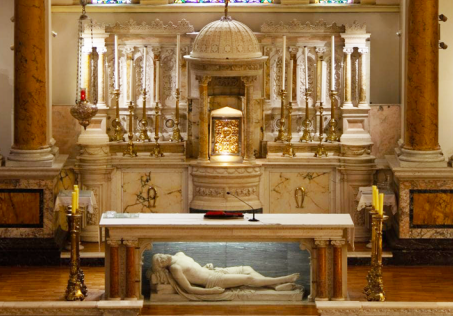
    church-stteresas-clarendon-dublin-1024x576

    He said that His wounds were for my benefit, for the benefit of many, for the world. My wounds had no meaning or context in isolation, only regarding my own life. Our pain is meaningless if it is kept hidden and in isolation. But when bared bravely, our painful wounds can be exactly that by which someone else is healed, for by His wounds we are healed.

    As I look back on these experiences, I see moments in which I wish someone could have stood up for me, to refute the injustice of the situation. I am proud to say that all along the way I stood up for myself, but I had a lot to learn about my threshold for tolerating poor treatment. I also could not have foreseen that these heartbreaks would actually begin to shape and feed into my academic research on fasting, suffering, and compassion, and above all, to fuel me with a greater purpose for becoming a scholar. Now I will not be silent when I see injustice and oppression, and it starts with my ability to choose what I will and will not tolerate for myself.

    Philippians 2:3-4 talks about how we should consider one another better than ourselves, and that we should not pursue our own selfish ambitions, but to consider the welfare of the other above our own: this is healthy humility and servanthood. This ideal does not work if it is not reciprocal, which is an extremely simplified way to define abuse.

    All of this is to say that I have shied away from making strong statements in the past, but my real experiences of being exploited or abused when I was most vulnerable have kindled a flame within me. I have been an immigrant with no built-in community to fall back on. I have been in the hospitality industry, living without any savings since 2017. I have experienced emotional abuse such as manipulation, coercive control, and gaslighting by a romantic partner—someone I met in church! I have been a woman not taken seriously by peers or superiors both in church contexts and academic contexts, despite my education, training, and experience in those field—intensely frustrating.

    Leslie has always been quiet. The volume level of my physical voice will not change, but I believe it is time for me to step forward and begin to raise my voice. My goal is not to condemn anyone, but to cry out for increased compassion toward others, rather than hardened hearts. This can only come if we have self-compassion for our brokenness, for we will begin to see it in everyone we meet, if we are truly discerning—even the most despicable among us. This is the only way for the light to shine through the cracks.

    Please, do not let your pain be meaningless. It will not be transformed and until we choose healing, when we are ready. That image of Christ’s dead body is stark, but unyielding in its representation of His very real suffering. When we choose to bare our wounds, it does not make them hurt any less. It does not shorten the duration of the pain; it does not magically erase the heartbreak. I hoped my healing encounter that night in November would make it all evaporate from my heart, mind, and body. Instead, it lessened the burden, because I knew I was not suffering alone, or pointlessly.

    As I look forward to a new chapter, it is my hope and prayer that I can use my own God-given Leslie voice to speak loudly on behalf of those vulnerable, underprivileged, and often silent. I may step on a few toes, but it is worth it if I can amplify the voice of someone else who has long been hesitant or afraid to speak. The ones who have been quiet the longest often have the deepest and most beautiful things to say. Listen to us.

    This little blog of mine doesn’t reach many people, but I want to publicly mark this moment, here in the earliest hours of my 32nd birthday, as a step forward into the light. I have been waiting to “speak” until I felt I had something of value to say, and I know now I have a message that I know will carry me forward, both as a missionary and as a female scholar in biblical studies.

    Sometimes I still wonder why I had to endure such awful things, but now I understand that I can channel it toward loving others, administering healing and compassion, and founding friendships that will change lives and communities, one moment and one soul at a time. This has always been my loudest prayer, and it is humbling to know that Jesus chooses to use me in this way.


  • Seeking Shalom: Fasting, Weakness, and Generosity

    September 29th, 2021

    Introduction

    For JW, with gratitude.

    In my earlier posts on this blog, I have written about fasting as an ascetic practice, or a discipline. Much of my work on this, especially from the view of theology, was on the benefits that it offers us, improving our self-control, increasing our capacity for joy in the midst of suffering, and overall, helping us to flourish individually.

    I believe that was short-sighted, and did not encompass the fullness of the message of the Bible, and in fact, I nearly missed it. Indeed, I believe I was instead informed more by a self-help approach, or what Baylor theologian and ethicist Matthew Lee Anderson would call a therapeutic approach to the practice. (You can read more of his thinking here on painkillers and caffeine, and or in his 2011 book Earthen Vessels: Why Our Bodies Matter to Our Faith, which really shaped my thinking on this topic.) The last year or so has helped me to not only deepen my research on fasting, but also to broaden my perspective personally and theologically. The following will be a small sliver of what I have been thinking about lately.

    First, I want to define the word shalom for us, or perhaps redefine it. Secondly, I will look at the role of humility and weakness in the fasting we see in the OT. Finally, I will connect those two ideas to show how fasting should generate compassion, and why this is so important.

    Peace or Mutual Flourishing?

    Shalom is broadly and most commonly defined as “peace,” but linguistically, and therefore theologically, it is much more than that. The way Hebrew works is that each word is built from a 3-letter root, made up of only consonants, thus in English we could transcribe this base word as sh-l-m (שׁלם). If we change the vowels according to certain rules, or add a prefix, we can also derive the words for “perfect” and “whole.” I am no expert (least not yet) in this realm called philology, but these literal meanings should inform the understanding of the word. Shalom is more than peace or simple tranquility; it is wholeness and well-being. In the context of the OT, it conveys the value of mutual flourishing, summarized by the command to love your neighbor as yourself (Lev. 19:18).

    What has obsessed me about this topic is trying to understand why this practice is so powerful. Why is fasting efficacious? Why do I seem to at times find breakthrough when I have spent concentrated time in prayer and fasting, even though this is a normal, unremarkable, weekly practice for me? Do I really move God with my piety, or is it me that is moved instead?

    Fasting in the Old Testament

    The practice has its origins in the Ancient Near Eastern rites associated with mourning, which means wearing sackcloth and ashes, in addition to not eating. So many instances of fasting in the OT include some kind of mourning either for grief of loss; or anticipatory grief, when there is some threat on the horizon. It is a strong physical response to deeply disturbing events of life. Another important time when fasting was practiced in the Bible was on Yom Kippur, the Day of Atonement. This was part of how they were commanded to observe this holy day, so there is some connection between fasting and repentance.

    So what’s the big deal?

    Why deprive yourself of food? When one is grieving or suffering in some way, it is easy to not want to eat, so this is a natural, physiological response. But when it is practiced regularly, in a kind of ritual way–meaning that it is not a responsive act only–something special can happen, if we have the right mindset.

    There is a lot going on here, in terms of social dynamics, that is not so obvious to us when we read the OT. This practice of fasting was probably always accompanied by some sort of physical, outward sign, like wearing sackcloth and throwing ashes on one’s head. This, by the way, is why Jesus tells His followers in Matthew 6 to essentially do away with the outwardness of fasting, and to let it be an inward, secret practice of piety that is for you and God alone.

    I won’t bore you with the philological details or the minutiae, but what can be summarized as a common thread of fasting in the OT is humility, and by extension, weakness. The idiom in Hebrew used to sometimes refer to fasting can be literally translated as to “afflict oneself.” This has connotations of and connections to shame, humility, diminishment, self-abasement… basically to make oneself small and insignificant. 

    But are we truly making ourselves smaller than we actually are when we throw ashes upon our heads, whether literally or figuratively? Or is it based in a recognition of our smallness and relative insignificance? Why deprive ourselves of food when we can become “hangry” in just a number of hours? Why should we, essentially, lean into and actually increase our weakness, even if just for a day?

    My Hebrew teacher said once that, anthropologically, fasting is a way to shame the deity into action. As a woman of faith, I doubt that we can move or influence God in some way, but we can attune our prayers to His will better when we decenter our selves by fasting.

    I have become painfully aware lately of my weaknesses and my limits. Nowadays, the most normal things like grocery shopping and taking public transportation can result in huge upheavals of anxiety. Yesterday I was on the bus for one hour, and today I am utterly wiped out from the extra effort of keeping myself calm and distracted during that period.

    Think about it this way. When I say weakness, it should not sound like a dirty word, because we all have them. What other weaknesses do I carry? Vices? Bad habits? Nervous habits? Coping mechanisms? What unites all these things is an understanding that we are human. At our limits is where we find God.

    Daily Bread

    When I was constantly running around at my café job, I struggled to keep a fast twice a week, because I always felt too tired and hungry to tolerate another fast. But the typical peasant of the time would have been constantly in motion like me, except unlike me, they had no easy access to extra calories. Their labor was hand-to-mouth. The words “food” and “bread” are synonymous in Hebrew for that reason; that’s all they could afford, and it was the basis of sustenance. I wonder if peasants in that time weren’t edged with hunger at all times, constantly aware and thus constantly both thankful for and fearful of their subsistence and the fruitfulness of their crops.

    So then, why willingly deprive yourself when you’re already hungry? According to the OT, it is so you see and help the poor and the oppressed. What fasting does is simultaneously heighten the threshold for personal suffering, and deepen a sense of compassion because of that suffering. (Read Isaiah 58.)

    Conclusion: The Generation of Generosity

    This is not just an intellectual exercise; it is changing how I live my life. The last number of months I have been facing financial uncertainty, and I have felt like I can’t afford to tithe, like I normally do. Despite the fear, I chose to give anyway, because if I hoard out of greed and hunger and fear, this will consume me, and I will be of no use to the people around me: my neighbors.

    Generosity is not only financial, though that is an important part of practicing love for neighbor. For many months it has been my hope and prayer that this pandemic will result in deeper compassion for the other through acknowledging our own fears and weaknesses, and in so doing, loosen our resources to be at the ready for someone else who is in need.

    The secret? We are all in need. The main principle is that if we develop in a spiritual discipline like fasting, and it does not benefit our neighbor, then we have failed. My challenge to you: how can you prioritize generosity in your life so that you can more sustainably give, and in so doing, create mutual flourishing?

    This is why we pray that God’s kingdom will come on earth as it is in heaven. We are seeking shalom.

    Read Part II here.

  • Transition and Provision

    August 13th, 2021

    We sometimes throw around the phrase ‘Jehovah Jireh,’ God provides. It’s easy to say, easy to tell someone when they are worried about the future. But that phrase comes from Genesis 22, the story of the Binding of Isaac. The Binding of Isaac, as in the story when Abraham brings his promised firstborn son up the mountain, and Isaac asks him where the sacrifice is, because they have everything for a burnt offering except the animal. And Abraham trudges steadily upward with his son and their servants, and tells him God will provide (v. 8). 

    This phrase, YHWH Jireh, or yir-eh, literally means ‘God will see.’ In English it gets translated as ‘provide,’ which is beautiful, because it is the Latin word for ‘to see’, paired with the preposition pro-, which means ‘to foresee.’ It just adds kind of a spatial element to this pericope: I get the sense that God was watching from the heavens, above the mount where he could see Abraham and Isaac in uncertainty on one side, and a ram caught in the thicket on the other side of the peak. He did not just orchestrate things so there would be a sacrifice in Isaac’s place–and what an incredible Christological parallel!–but he saw it all. This is why He asked Abraham to trust Him.

    I am in the middle of a long-haul transition here. Last year I was struck unexpectedly with inspiration to pursue a PhD in a slightly different direction academically, which means it will take me to a totally new location. Last year’s moment of inspiration has transformed me as a person, as a scholar, and totally changed my life overall, in such a short period of time.

    Some of you have been hearing me talk about super cool Bible scholars in all sorts of places, from Atlanta, Georgia to Germany, and month by month and week by week there has been nothing but development and growth and opening of doors. My head hasn’t stopped spinning all year. At this point I am living in the ambiguity of not knowing where I’ll be studying, but pursuing opportunities headfirst anyway.

    Within only a few weeks of arriving back in Dublin, I knew I needed to find an end date for my time at the café where I’ve been working since 2019. I began to pray profusely all through July, and after a terribly difficult and stressful two weeks, made the agonizing decision to leave behind a place and people that had been my second home through a chaotic period. I started teaching recently at my alma mater, Northwest University, as an adjunct instructor for an online theology course. My priority this last number of months has been academics, and I have had to be swiftly decisive time and again to protect my studying and writing time. So I have handed in my notice, and now, my last day ever as a barista is in one week.

    It is still too early to know when I’ll be leaving Dublin: I will be staying here for the time being, teaching from across the Atlantic, perhaps taking on some individual students to tutor, and furiously studying all my research languages.

    But returning to this city after five months away has made me see it almost with fresh eyes, especially when the pandemic has contorted what I used to know. I have memories of this place going back almost a decade, and so many friendships spanning all these years. My oldest friends, from St. Mark’s, know me as the crazy American who would not give up until she was in Dublin. I went back and forth so many times between Dublin and the US in the span of five years, and each time I felt I was returning home.

    molly malone and friends
    Me and some friends on my last Sunday after a year at St. Mark’s in 2015, before I went back to the US (for the first time.)

    However, as difficult as it may be for my dear friends to hear, so many brothers and sisters of my heart, I have always known Dublin would not be my long-term home. I have relished every moment here, treasured the times with friends and cherished the things I have experienced, because I always knew deep in my heart that this was for a specific chapter of my life, as a young twenty-something who was happy to live in the middle of a noisy city and make coffee while her dreams were brewing under the surface.

    Reuniting with these friends after the pandemic has been a tonic, like a reminder of who I am. Yesterday I had breakfast with a friend at my favorite place, The Fumbally, and I was describing to her how I just knew it was the right thing to quit my job at the café, even though I only know I am contracted to work for NU through October, at this point. I said something like, well I guess I’m just going to have to take this step as a step of faith. And she said Leslie, that’s pretty much the norm for you. This is standard for as long as I’ve known you.

    I forgot, somehow, that this is how I’ve been living my entire adult life. The only way I got to where I am, living in Dublin, with a master’s in theology and opportunity and potential to become a biblical scholar, is by taking a step before I could see the path in front of me, Indiana Jones style. Five years ago I took the scariest step of faith, and the events that followed my brave choice to summer in Ireland without plans resulted in me finding my true vocation in academia. God saw. God saw. 

    master of philosophy
    I’m still miffed they didn’t let me keep my master’s hood. I would probably still be wearing it now. (Graduation, 2019)

    I feel very much like Bilbo Baggins, thrust out, unprepared, on an adventure he didn’t ask for when he would rather stay cozy at home, where life is stable, reliable, and predictable. It has never been easy. I made sacrifices of so much to pursue this life. I bitterly struggle, constantly, with the fact that I do not have my own house and that I am not settled down yet–separate to the fact that I am single and still waiting to find my life partner! Beyond that, this current ambiguity of not knowing where I will be living for the next five plus years as a PhD is the keenest form of torture I have ever known.

    I feel weary lately, weary with not knowing, and weary from pushing myself a little too hard for the last year. I think at this stage I am almost at the top of the mountain, knowing God will provide because He will see my needy circumstance. My legs are burning, my lungs are bursting, I’m running out of water. 

    But I just want to record this painful moment here, so that whenever I finally get to announce where I’ve been accepted to do my PhD, it will come as the provision to a great need, an answer to all the sacrifices I’ve made, a fulfillment of a huge and long-looming question.

    Dublin 2012
    Me in July 2012, first time in Dublin.

    For a very long time I knew specifically I was supposed to be in Ireland, and once I got here in 2014 I didn’t know exactly what I was supposed to be doing. That came in time, really slowly. But now, the exact opposite has happened: I know that I am meant to be taking on a PhD and studying the topic of fasting in the Old Testament. But God won’t budge or give me any hint about where I’m supposed to be studying. Maybe He won’t reveal it until I’m at the top of the mountain. 

    But until then, I just have to remember that God will see me struggling upwards with empty hands, knowing I have great need of provision. Truly countless times He has met me atop the mountain of sacrifice, filling my hands when I came with nothing. 

    Things are falling into place. I can see some of it, and I know there must be more happening behind the scenes. But be encouraged, because when God calls us to make a big sacrifice, sometimes He is asking us to sacrifice something we don’t have yet, and we can be confident that if He is calling, then He will meet us there in that place. 

  • Horizons

    July 5th, 2021

    The first career I remember dreaming about as a kid was becoming a scientist (thank you, Bill Nye). I also wanted to become an artist, because I loved painting and drawing.

    I remember when we moved to Soap Lake, Washington, a woman at my new elementary school asked me what I wanted to be when I grew up, and I told her either a scientist or an artist. I won’t forget the confused look on her face, as if those two things were opposites, and that it was a ridiculous dream.

    But when we ask kids that question, what we’re really trying to find out is who they are, just as much as they are learning who they truly are. I remember feeling disheartened by her response, because she was, in essence, by dismissing my dreams, dismissing me.

    Sometimes life’s path can seem a little meandering; in community college I was led by my artistic impulses to take ceramics classes for a year. I absolutely loved it, even though I was no good. Little did I know that in my thirties, I would come to find my artistic inclination come to meld deliciously with my love of science in archaeology. Looks like that pottery class wasn’t inconsequential, after all!

    I’m still a budding Indiana Jones in some ways, but knowing terminology and the tactile reality of making pottery has been such an advantage as I have begun to explore archaeology in the ancient Levant. 

    Based simply upon how the pottery is formed, how it is finished (burnished, glazed, painted, left plain…) we can tell where it was made, which shows us that if it has traveled far, due to trade in the region; approximately when it was made, based not only on the development of the style or techniques, but how the movement of peoples and their pottery styles influenced the changes to the pottery in the area; and through petrography and minerology, from where exactly the clay was taken, within 200 meters squared! There is so much information we can gather from such a commonplace object. There are even some archaeologists that think they can discern what type of society ancient Israel was–conjectured to be egalitarian and embracing simplicity, versus materialistic–based upon the unadorned nature of their pottery.

    burnished pot
    Canaanite jar

    In an archaeological dig, much of the work is done on what are called tels. It is a specific word for the manmade hills upon which ancient Levantine settlements were built, layer by layer. So each site has a tel named after it, sometimes similar to what we have in the bible, and sometimes with a different name.

    The way we extract information about these ancient settlements is to dig through them layer by layer in order to uncover the artifacts that could be there in the soil, and this reading of the data is called stratigraphy. Even the soil itself is extremely useful in providing information about how the soil got there. For instance, if there is ash, did something burn, or did the ash gather there, blown by the wind? It can also give us information about the type of vegetation which flourished in that era, and therefore the climate at the time, thereby helping us understand fluctuations in population and movements of peoples.

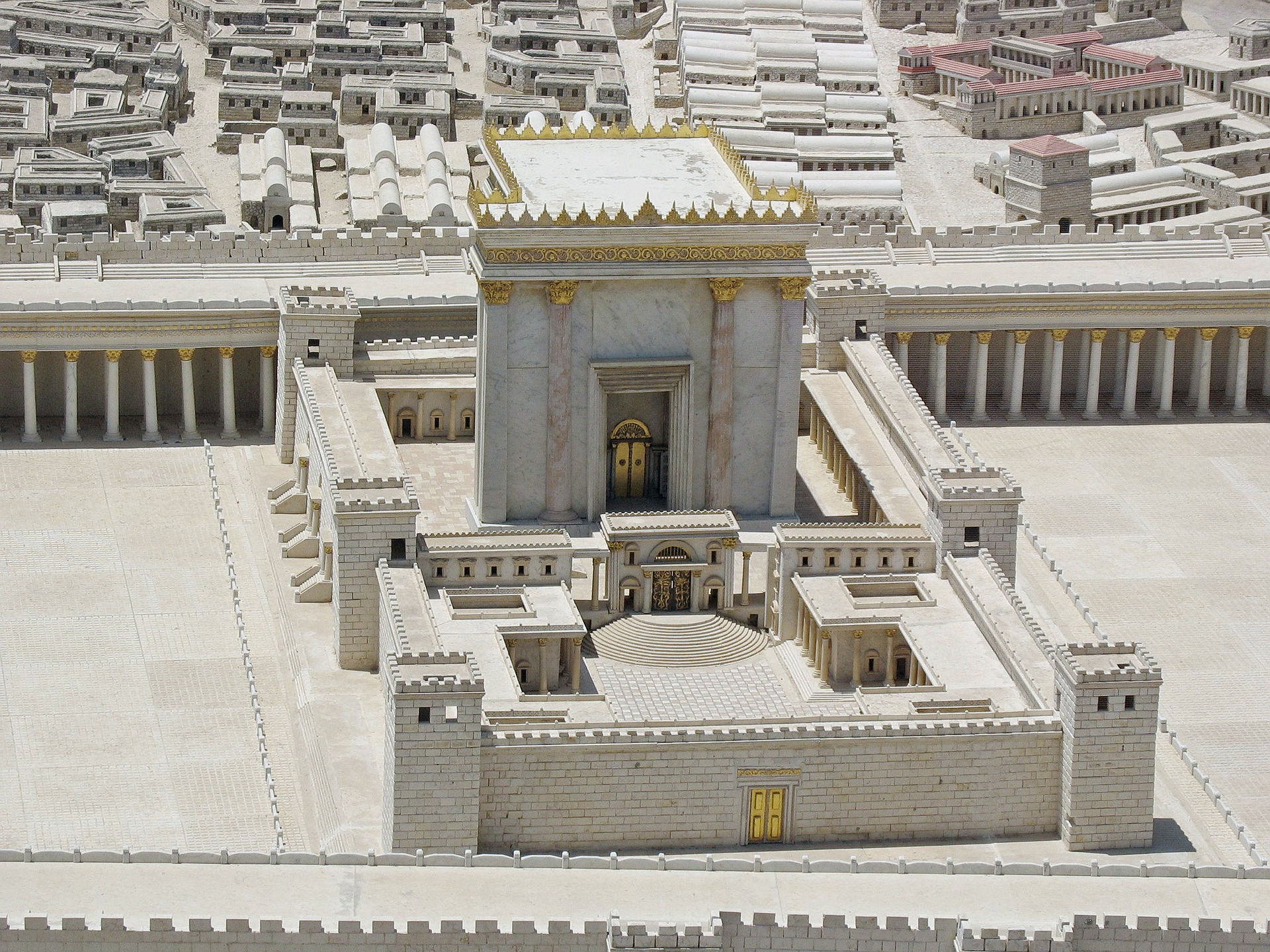
    Model of ancient Jerusalem

    This knowledge, then, should give us a deeper understanding of what it means in Isaiah 61:4 when the prophet says that Israel will one day build the ancient ruins, and repair the “devastations of many generations.” One devastation after the other, these strata were built up into an increasingly higher “city on a hill.” At times the tels lay uninhabited for hundreds (or even thousands) of years, until they were inhabited again at a later period in time, and people simply rebuilt: sometimes smaller settlements, and sometimes larger, but always atop the old foundation.

    Everything we can glean from a particular stratum usually shows commonalities along strata from around the same date, in the wider region. These established cultural traits are called the archaeological horizon. It reflects a reality that once existed, that once thrived, that has been destroyed and gone for thousands of years, but that still speaks to us about what once was real. And just as physically these layers provide the foundation for the next stratum, it is the same with technological advances: from the Bronze Age until now, we build a new present on previous realities.

    I feel that since last year, I went through a devastation phase–again. In some ways the personal devastation wrought by the pandemic feels strangely familiar, reflecting the many times I have moved in my life. Each time I move I have to rebuild myself, in a way. I have to reintroduce myself, I have to reestablish myself in who I am, and build from the resources I have around me. Sometimes those resources have been extremely scant, and in other places, like here in Dublin, they have tended to be plentiful and rich.

    I know that while I was in the US for those unexpected five months this year, I transformed. I developed tremendously as a scholar because I did nothing but read and study. But also I made conscious and continuous choices to heal from the traumatic experiences I had in 2020. I rebuilt myself from the ground up. I am still the same Leslie, but just in a new phase.

    Therefore, returning to Ireland and even moving house a month ago has made me feel like I am again in a rebuilding period, post-devastation, with meagre resources. I still have the memories and even artifacts of the previous horizon: photos and gifts and mementos which remind me of my once busy social life, in which I was running in so many different social circles–academic, church ones, non church ones, work ones, etc.. Some of my friends are still in Dublin, many are not. I have changed churches. It’s different, and I feel a gentle, pervasive sense of grief that I associate with Dublin now.

    All this to say that it is forcing me, in the lonesome moments, in these recent weeks when my energy levels are not what they used to be, to dig deep and reexamine my old horizons. What makes me who I am? What makes me feel like myself, when my same friends no longer surround me in their dozens? Where is my old self-sufficiency, when I had to entertain and sustain myself in seasons of loneliness?

    All of these strata which make up an archaeological tel have one thing in common: they are called destruction layers, for all that remains are the foundations of what used to be there. Whatever grandiosity, whatever flourishing life was there, has vanished, but the base which held the settlements and grounded life is still there for us to examine, and to learn from.

    When everything is swept away, and we no longer recognize our old lives, remember the foundation is still there. And remember that we can rebuild on our foundations, because they remain sure as ever. As we come out of this pandemic, whatever we rebuild from the devastation will be something completely new, but based on our same true selves.

    Regardless of whether our old selves were “better” or more grand, my prayer for our world is that our new selves will be truer than before. Let us also remember that we cannot build something to last if it is not built on the solid foundation of who we were created to be in Him. And finally, let us have the courage to dig into our souls, to remember the previous horizons that brought us here, in order to expand into a new horizon.

    2nd temple model
    Model of the second temple built by Ezra, and refurbished by King Herod

  • Reflections in Exodus

    March 30th, 2021

    In the course of my master’s, we did a class on theology and the arts, and one thing we focused on in particular was iconography. This comes out of the Eastern Orthodox tradition: icons are two-dimensional representations of saints or special moments in their lives, which act as windows to the heavenly, in essence. And due to the density of their visual theological meaning, when one creates an icon, it is called writing an icon, not painting.

    Icons are written always upon a golden background, created with gold leaf. And the dimensions of an icon usually look funny, especially with their somber faces and huge eyes, but everything is shaped in a kind of reverse perspective, so that instead of receding away as things do in reality, the icon seems to be advancing toward you. It’s strange and surreal, but how else can one represent the heavenly realm?

    In Greek this says, “Moses receives the Law from God.” Notice the sandals cast aside in the lower left corner.

    The idea is that the saint represented in the icon is in fact looking at you, not the reverse. It is peering at you from heaven, from the presence of God, inviting you closer to Him. I get the same feeling when I read Scripture. That it is peering into me, examining me, and calling me closer to Jesus. It’s like gazing into a mirror sometimes.

    wander-creative-IiYGHLz_v18-unsplash


    In Exodus 15:22-27, the first thing that happens after the Israelites cross the Red Sea is they complain. Surprising, right? They went three days into the wilderness with no water, and when they did find water in a place called Marah, they couldn’t drink its waters because they were bitter. (Marah means ‘bitterness,’ which is why it was named that in the first place.) Possibly due to something like a thirst-induced delirium, they begin to panic and complain against Moses, wondering what they are to drink. Moses cries out to God, who shows him a piece of wood (or a tree, these are the same word in Hebrew), and Moses throws the wood into the waters, and they become sweet and drinkable.

    The second portion of this little pericope (story) is a little odd, because then it says that God puts them to the test and tells them if they obey His commands and keep His statutes, He will not bring the same diseases upon them as He did the Egyptians, just a few chapters earlier. He says this is because He is Yhwh who heals them. You may know this phrase as “Jehovah Rophe.” It’s puzzling, because if the Israelites are well, why is He telling them He heals them when they don’t have any diseases? Do they need healing at this moment?

    There are two levels of resonance in this text, beyond the literary context. The book of Exodus is attributed to Moses by tradition, and this statement is fraught with lots of places for current biblical scholarship to jump in and disagree. There is the possibility that Moses, as we know him, did not exist, not to mention the fact that the earliest forms of alphabetic writing did not begin to spring up in the Levant until after the Bronze Age, which is when the Exodus is located in time. 

    As a scholar, I can say with confidence that while Moses likely did not write down the Torah himself, if anything can be traced back to Moses, it would have to be through the oral tradition. This means that Israel only had the infrastructure in place in order to begin writing down their own history once they were exiled in the 6th century BCE. By infrastructure, I mean scribal training and physical resources, which were not widely available, only to an elite literati.

    Why is this so important? What do I mean by this dual resonance? What was it the Israelites needed healing from, there in the desert? This is where I was able to add another level of resonance in my reading this morning, filtering it through my experiences in the last year.

    This time of year, for most, if not all of us, is a traumatic anniversary. The experiences I had last year make it actually very painful to think about what happened a year ago. This time last year, while we were in lockdown, I went through a breakup, in almost complete isolation. It was a very unhealthy relationship, and brief as it was, I am still today sorting through wounds I received in those few months. And now, I am remembering how excruciating it was to experience such an ugly breakup while having to be isolated from anybody I love. There was no comfort at all for me. Those months made up the darkest period of my life.

    I am probably not the only one who also finds it difficult to pray lately. I feel so dry and receive little joy or consolation when I am able to formulate a short prayer. I also feel somewhat emotionally dry, and haven’t been able to cry much in the last nine months or so. It’s like I used up all my tears in those months of lockdown in 2020. It’s a really foreign and strange place to be, psychologically.

    By instinct, I still pray, but my prayers are like fleeting glances at the face of God, and my relationship with Him right now feels stiff and cold while I am healing. I still don’t understand why I had to experience that feeling of near-abandonment. My hope is that the total experience will be redeemed for some greater purpose in the future.

    In this story from Exodus, I find my reflection there in the bitter waters of Marah. I am bitter. I need healing. I need transforming. Just as a people subjugated to hundreds of years of slavery, once freed, would have been bitter. And just as a people, subjugated once again by foreign rule, in exile from their homelands, would have been bitter as well.

    God brought visible diseases upon the Egyptians by the plagues. But bitterness is inward, and while the Israelites may have been physically healthy, they most certainly were bitter at this point in their history, whether it be post-exodus, or during exile. I don’t want my pain to poison me, the bitterness I experienced to embitter me.

    I look at the waters of Marah and I see my own tears. Once a few years ago, I felt God gave me a promise that what tasted bitter to me at that moment would one day taste sweet, and it came from this same story. I find myself physically in the same place as I was when He spoke that to me. I am back in the stark, sagebrush steppes of Central Washington, drinking not only the bitterness of memory, but also the bitterness of loneliness and isolation from my dear friends in Europe.

    The solution is not to find new waters, but to transform these waters of bitterness into sweet, live-giving waters. The Bible says Moses threw a tree into the water in order to do that. Not only can wood be used to purify water—like Moringa olifeira seed cakes, or charcoal, both bitter things—but this tree/wood so strikingly makes me think of another tree of bitterness. The Cross.

    Maybe it seems impossible. Maybe our desert thirst has made us forget the greatness we have seen God demonstrate in our own lives. But when He leads us to the waters waters of Marah, bitter though they may be, we must drink them, or else perish in the desert.

    I still cling to that promise, that what tastes bitter to me—to us—now, will one day taste sweet. I am confident of that. And I am also confident that, if we choose to let Him, He will heal our souls from bitterness and create rivers of living water within us.

  • The Economy of Righteousness

    February 14th, 2021

    “The wicked earn no real gain, but those who sow righteousness get a true reward.” Proverbs 11:18 NRSV 

    What is righteousness? Is generosity confined to the financial?

    “Some give freely, yet grow all the richer; others withhold what is due, and only suffer want.” v. 24

    I have often wondered how it is possible to gain more when giving. How can it possibly be the truth? Yet these verses speak about more than just material gain, or even a sort of karmic payback for one’s actions. I have seen this in my life the last number of years in Ireland in a vivid and unique way. There are three salient cultural concepts intertwined here in scripture, which I have already outlined in my post on Jabez. These verses show interplay between honor, collectivism in society, and limited good.

    Generosity fosters love and loyalty and kindness and friendship. I have seen it at Tiller + Grain! I love my barista job at that little cafe. My boss, Clair Dowling, the most fab, fun, and warm-hearted boss ever, is a generous person. Whether it is giving free cookies to our favorite customers despite their cries of “I’m on a diet,” purposely under-charging for huge portions of food, or going out of her way to suit any customer’s taste or strict dietary requirements, her goal is to create customer loyalty.

    If you peer through the window closely, you can see me in this picture.

    I also love amazing food, great coffee, and people just as much as Clair does, and for me generosity looks like giving surprise free coffees, saving someone’s face when they spill something, or just genuinely taking an interest in the people who come visit, whether daily regulars, or first-timers. As a foreigner, I only realized how generous the Irish could be once I had earned their strict loyalties. Customers turned into friends by the end of 2020, as they began rejoicing in my victories, or mourning my hard times. I’m more than just their barista. This is why I love the job so much.

    “A generous person will be enriched, and one who gives water will get water.” v. 25

    The richness of being generous is manifold, especially when giving a precious and extremely limited resource such as water. In ancient Israel, there were two ways of getting water: either drawing from a well, or a cistern. A cistern is different in that it collects rainwater, like a giant underground cavern. Fresh springs are rare in the land, and so cisterns were a main source of water, and not very reliable. Israel already does not receive much rain. Because the land is prone to drought, the preciousness of water cannot be emphasized. None of us has probably ever felt true, life-threatening thirst, but the writers of the Bible probably did.

    When someone else is in most desperate need and you give, out of your own limited resources, you can be sure your greatest needs will be met. I have experienced it from my Irish family, and it is humbling to receive. It only makes me more generous in turn to those who could use my help. So, although the wicked may turn a profit, the real reward is living in right relationship to God and your community.

    “The people curse those who hold back grain, but a blessing is on the head of those who sell it.” v. 26

    Perhaps this verse will help to better understand the concept of limited good: that is, that resources are limited and should be divided equitably for society to flourish. Why is it wicked to “hold back grain?” This creates scarcity, thus driving up the cost. If we’re talking about the latest Yeezy kicks, then sure, make a profit. In a capitalist country like the US this doesn’t seem too bad. Yet in a drought-prone land like Israel, a shortage of something as basic as grain could not only cause deaths by starvation, but if too scarce, could eventually cause society to collapse.

    The latest archaeo-scientific advances show us that due to successive droughts brought about by climate change from the 13th to 12th century BCE in the Levant (Israel/Palestine/Jordan), entire city-state civilizations collapsed, due to their dependence chiefly on grain. This is what ended the Bronze Age and ushered in the Iron Age, from whence Israel and the Bible emerge.

    There is no functioning or flourishing of society without the trade of grain. There is an especially symbiotic relationship between pastoral nomads (see: shepherds and goatherds) and the sedentary agrarian population. Neither one could survive without the food produced by the other. The settled population would trade grain for milk, and the nomads milk for grain, and therefore bread. In that economy, grain was both currency and food. We know this from the Joseph cycle in Genesis 37-50. This is why it is dishonorable—shameful—to “withhold grain.” A limited commodity could not be hoarded for the benefit of one household, not least of all because it so negatively affected others.

    “Those who trust in their riches will wither, but the righteous will flourish like green leaves.” v. 28

    Therefore, only trusting in riches makes one a selfish and self-sufficient person. For them, their world is dog-eat-dog. There is no open heart to trust in others or foster love, and therefore no help from the community in a calamity. This is why the Hebrew word here for “wither” means “to fall,” because they will fall like withered leaves. They are not truly connected to a source of life in community. We see this comedically played out in the TV series Schitt’s Creek.

    Righteousness, then, as Proverbs shows us, is not simply being clean before God, it intricately connects us to others. Loving God and loving your neighbor is how Jesus sums up the Law and the Prophets: this is righteousness. In the eyes of God, our actions out of our relationship with Him should consequently equal righteousness in the eyes of the community. We should be a credit to our communities! This goes beyond, of course, the financial. This is the economy of righteousness.

    In conclusion, let us be deeply grateful to the communities that hold us, especially in these times of drought. May we never forget that we can each contribute to the shalom, or total well-being of one another, because we all have something unique that the other needs. Let this gratefulness for our communities spur us on to be even more generous, of both heart and of resource.

  • Saint Patrick, Chaos, and Sea Serpents

    January 2nd, 2021

    I am a little afraid of water. I can swim, absolutely, but sometimes the sight of deep water frightens me, for a reason I can’t quite explain. In the ancient world, broadly speaking, water represented fear and chaos as well. The sea is unpredictable, after all, and dangerous to traverse. Why else would we have so many legends of sea monsters?

    In the Ancient Near East, there was an understanding that evil was represented by chaos, and good was represented by order. This idea is present in many forms and symbols in the Bible, all across the Old Testament and even in the New Testament. Often chaos and evil are represented either by waters, or by serpents that crawl out of them.

    The depth of the symbolism is so rich in the Bible, and I want to share with you some thoughts that have been percolating in my mind for at least ten years. First, to bring it into a Western context, I want to share a couple legends of Irish saints. Then we’ll compare a little of the Babylonian creation account to the biblical one. Lastly, we’ll take a look at mythical water serpents mentioned in Isaiah, Job, and Psalms.

    A Snakeless Island

    Ireland, in case you didn’t know, doesn’t have any snakes. All of Europe has them, and even in Great Britain snakes can be found, but not in Ireland. And early Irish Christians, from the 7th century, have told legends about snakes being banished from Ireland. The most famous one, of course, is that St. Patrick banished all the island’s snakes after they began attacking him while he was fasting for 40 days atop a hill. Another similar version of this story, has to do with St. Kevin, abbot of Glendalough (d. 618). Glendalough, which means “valley of the two lakes,” holds the remains of an old monastic city, which remains a place of pilgrimage for the faithful. There are seven old churches on the site, which shows how important it was in Irish Christian history.

    Glendalough is composed of two lakes: one small, round Lower Lake, and a larger Upper Lake (pictured above). The legend of St. Kevin says that one day he was fording his cattle across the shallow Lower Lake and the great serpent that lived there kept pulling his cows under and eating them. So St. Kevin, at one with nature and filled with the power of God, banished the creature to the deep Upper Lake, where it could no longer terrorize his poor sweet cows.

    When I was studying early Celtic Christianity in Ireland for my master’s degree, we learned about these myths and legends with a sense of real reverence. For those of us who believe in the miraculous power of God, it’s feasible that, for instance, St. Patrick could banish both slavery and command the snakes to slither back into the sea. (Really, there’s no evidence of there ever being snakes in Ireland.) But regardless of how accurately or inaccurately these hagiographies (biographies of the saints) recount history, they preserve a kernel of truth at the center, and especially spiritual truth.

    Chaos and Sea Serpents

    In ancient Babylon, they too had a creation story, which told of the origins of the world. Their myth, called Enuma Elish, tells that before the world was created, there were two water deities: Tiamat, the sea goddess, and her husband Apsu, the fresh water god–and everything lay in chaos.

    When in the height heaven was not named,
    And the earth beneath did not yet bear a name,
    And the primeval Apsu, who begat them,
    And chaos, Tiamat, the mother of them both
    Their waters were mingled together,
    And no field was formed, no marsh was to be seen;
    When of the gods none had been called into being,
    And none bore a name, and no destinies were ordained;
    Then were created the gods in the midst of heaven…

    Later this myth tells how the great god Marduk won in battle with the sea goddess Tiamat, and splits her dead body in two like a dried fish, setting one half of her water-body above in the heavens and the other half below on earth.

    In Genesis there are several parallels to this Babylonian myth. This includes a dividing of the waters from waters (Genesis 1:6-8), an etymological connection between the Hebrew word tehom, meaning the deep waters (v. 2), and the name Tiamat. More closely related, however, to our topic of chaos and waters, is a Hebrew phrase in that same verse:

    The earth was without form and void, and darkness was over the face of the deep (tehom). (Genesis 1:2 ESV)

    The words here which mean ‘formless and empty,’ in Hebrew make a fun phrase called tohu wa bohu. It’s a kind of play on words, and the closest English equivalent would be something like topsy turvy, or maybe even upside down. This conveys that creation started from a place of complete chaos. Sometimes it is taught that creation came ex nihilo, meaning out of nothing, but in fact, what we have here clearly in Hebrew is the first biblical example of God bringing order out of primordial chaos.

    If the biblical creation myth preceded Enuma Elish, then we might presume that the Babylonians and Sumerians copied the Hebrews. However, today, scholars date Enuma Elish as being at least several centuries older than the biblical text. I would argue that this is not incompatible with believing in the doctrine of creation, even if the Babylonians got there first, so to speak.

    What does it mean then, that these two stories are so closely interlinked? What about these strange water deities and their fighting and clamoring? There are two main differences between the Babylonian and the biblical myths, and this is why it is important that the Babylonian myth predates the biblical recording of creation. First, unlike both the Babylonian and the Sumerian creation myths, in Genesis we are told that world is not born out of a great battle between equally powerful deities. Secondly, the noisy pantheon of Mesopotamian nature gods is swapped for the calm presence of the one true God, YHWH.

    The biblical creation story retells this Mesopotamian tale in order to demythologize it. What that means is that, whereas the Sumerians and Babylonians needed lots of little gods for every part of life, the God YHWH is supreme over all. Whereas the world in ancient Mesopotamian eyes was chaos begotten of chaos, the creation of YHWH was absolutely perfect, reflecting His nature, for He brings chaos to calm.

    Both in scholarship and in personal belief, there is a spectrum of ideas about the origins of the world, ranging from a literal six-day creation and a young earth, to an old-earth evolutionary perspective. Regardless of where one falls academically or personally on this, the spiritual truths about God remain the same.

    Sea Serpents and Biblical Mythology

    In other parts of the Old Testament, there is some vivid poetic imagery of God defeating sea creatures and chaos, known by three different names.

    Isaiah 51:9 (NRSV) calls for God to:

    Awake, awake, put on strength,
        O arm of the Lord!
    Awake, as in days of old,
        the generations of long ago!
    Was it not you who cut Rahab in pieces,
        who pierced the dragon (tannin)?

    Here Rahab is used as a poetical name representative of Israel’s timeless foe, Egypt–not to be confused with the Rahab of Joshua who helped the Israelites conquer Jericho. The tannin is a type of sea serpent.

    We find in Job 9 a retelling of creation in stunning language, speaking of how the creator God subdued the mythological creature of Rahab (v. 13), and trampled upon the back of the Sea (v. 8).

    Finally, in Psalm 74:13-14, it says:

    You divided the sea by your might;
        you broke the heads of the dragons (tanninim) in the waters.
    You crushed the heads of Leviathan;
        you gave him as food for the creatures of the wilderness.

    Scholarly views of these texts would point to a certain development of Israelite religion over time, and that these texts are the remains of a Caananite pantheon, as Israel moved from the darkness of polytheism to the glory of serving the one true God. Pentecostal Christians, and more broadly in the evangelical world, would state that scripture is simply inerrant and inspired by God, and especially that Israel always served one God from the beginning.

    I only share that contrast to say that, theologically, the truth of this text remains the same, regardless of one’s opinion of the biblical background. The Bible is ultimately the story of God and His power to triumph over evil.

    The Spiritual Sea

    If we reexamine the life of St. Patrick then, through this lens of metaphor and poetry, it tells us that St. Patrick was the one who banished evil from the island by bringing the light of Christianity to a once pagan land. St. Patrick is also attributed with being the one who abolished slavery, which is a pretty incredible step forward in the humanitarian realm. Thus we see that he was a special man who transformed Ireland with his missionary work.

    The Bible uses the mysterious and the symbolic often to speak greater truths about God than we could possibly put into words or literal statements. This is why we need beautiful, ancient, and profound metaphors like we see in Isaiah, Psalms and Job. Once we can see the world in these sort of metaphysical and spiritual terms, for instance, it brings much more depth to the New Testament miracle in which Jesus calms the wind and subdues the waves with his voice…

    Powerful, isn’t it?

  • A Fresh Take on the Prayer of Jabez

    November 2nd, 2020

    If you’ve been in the Evangelical Christian community for more than 20 years, like me, you’ll remember a book called The Prayer of Jabez: Breaking Through to the Blessed Life, by Bruce Wilkinson, which essentially championed a form of the prosperity gospel–problematic for reasons I won’t get into here. In 1 Chronicles 4, two verses (9-10) are devoted to Jabez, who asks God for financial and other blessings, and God gives it to him. It seems like a spiritualization of the American Dream, endorsing the endeavor as spiritual or even godly. Ask and you shall receive, right? But since Jabez is mostly known from this book about his prayer, I felt it didn’t do his story justice.

    A couple weeks ago I was reading in 1 Chronicles, and was so struck by his story. Come with me on this journey, and let’s take a look at Jabez from a socio-cultural perspective. Stay with me, because it will be easy to understand, even if it seems too academic.

    First, we will examine the importance and meaning of honor in a collectivist society. Secondly, we will take a look at the importance of a mother’s wisdom in a child’s life, and Jabez’s mother in particular. And lastly, we will look at how the prayer of Jabez illustrates just how special a man he was.

    Jabez’s story comes in the middle of TEN dense chapters of genealogies in Chronicles. (Chronicles is another retelling of the history of Israel and Judah.) So any extra column inches given to a character, especially in the midst of a list of names, shows just how significant and important Jabez was: writing space was precious, and the Bible avoids any unnecessary details to its main aims. 1 Chronicles 4:9-10 says

    Jabez was honored more than his brothers; and his mother named him Jabez, saying, “Because I bore him in pain.” Jabez called on the God of Israel, saying, “Oh that you would bless me and enlarge my border, and that your hand might be with me, and that you would keep me from hurt and harm!” And God granted what he asked.

    Honor and Collectivism

    Jabez was more honored than his brothers (1 Chron 4:9a)

    Two basic things to understand about the culture of the Bible, are the ideas of collectivism, and honor/shame. Western society in general, but American society in particular, tends to be concerned with what benefits the individual firstly, and not the community. In the US we say the squeaky wheel gets the grease. But in the UK and Ireland it’s a little bit different: we call this tall poppy syndrome. The tall poppy gets cut down: this means that to stand out too much is to threaten the wellbeing of the community.

    Our heroines in American films tend to rebel against this kind of communal and kinship-oriented society, and they’re seen as heroic for breaking free of what is shown as an oppressive community. But this beautiful emphasis on the community, so important to a biblical ethic, can be summed up as love for neighbor. The highest value is not to look out for “number one” (myself), but for others.

    Another interesting feature, that again I see more of in Irish society, is the idea of honor vs. shame. With social media now, it is not uncommon for people to feel the weight of collective shame when they make some sort of socio-cultural faux pas. There are Americans whose lives have been ruined forever after a racist rant is caught on video. They lose their jobs and can’t find new ones because of the social stigma.

    Conversely, many people receive honor through social media, like when celebrities “use their platform” to comment on or contribute to the right causes: social justice, Black Lives Matter, LGBT rights, #MeToo… the list goes on. Our society is not a true honor/shame society, but this gives you an idea. If the community affirms you, you are an honorable person, and you can become more or less honorable based on your actions, and more is at stake depending on how high your status in society.

    The key is this: in an honor/shame driven society, what gains a person more honor is not that they are an outstanding individual, but that their words and actions contribute to the good of the community, and thus mutual flourishing. This year especially, the ideas of mutual flourishing, of collective honor and efforts, and gaining honor among our peers, have become especially relevant. It is this same exact dynamic that is so important in the Bible.

    The Wisdom of The Mother

    And his mother named him Jabez, saying, “Because I bore him in pain.” (1 Chron 4:9b)

    My favorite Bible myth to dispel is that the Bible is only patriarchal and sometimes even misogynist. That’s hardly the case: I would argue that while there are some misogynistic characters, and certain parts that are patriarchal, this is not what the Bible promotes! And this idea is so empowering, because it makes Scripture relevant beyond just the spiritual life of believers, but also in secular society.

    In an exciting conversation between two Hebrew Bible scholars, Jacob Wright of Emory University, and Tamara Cohn Eskenazi, taken from a class on Coursera called “The Bible’s Prehistory, Purpose, and Political Future,” we learn a bit about the importance of the mother in society at the time. Proverbs 1:8 elevates the position of the mother as an important figure in a person’s life: “Hear, my child, your father’s instruction, (or discipline) and do not reject your mother’s teaching.”

    The word in this verse for “teaching” is the word torah, which is the Hebrew name for the Pentateuch, or the first five books of the Bible. This is the basis of the law and the teaching of Judaism, and our foundation as Christians: the Old Testament was the entire Bible for Jesus! (Lest we forget!) Dr. Eskenazi states that, “The only figures who dispense torah are God, Moses and the priests.” But in Proverbs, the mother dispenses torah; teaching, or divine wisdom. This is one reason why intermarriage was forbidden historically, because it was the mother who was in charge of the initial education of the children. Nehemiah shows his concern for this, because the children of Israel in the generations following exile no longer can speak Hebrew, because they are speaking the [foreign] language of their mothers, meaning they were also not taught in the ways of God. (See more here.)

    I was a bit disappointed to find that Jabez’s mother doesn’t have a name, because I wanted to research who she was and what her name meant. But in some ways, perhaps Jabez’s mother could be anyone’s mother, and this is why I am so excited about this.

    Jabez’s name means “he causes pain.” On first glance, it seems like Jabez’s birth was particularly painful, hence the name. But here is why I think Jabez’s mother was so wise. It says that she had other sons; we don’t know whether Jabez was the firstborn son, but if it warranted mention that he was more honorable than his brothers, this indicates something remarkable or perhaps unusual about him. Perhaps he is more honorable than even the firstborn son in his family. Whether Jabez was the firstborn son, and caused the greatest physical pain his mother had ever felt, whether she had had one or multiple miscarriages previously, or whether he was a particularly traumatic birth following his brothers, his mom knew that life is full of pain. She would’ve seen this same pain in the lives of the women around her, as I do in my own friends and family. If there is one thing we learn from Genesis, it’s that childbirth is painful (Gen. 3:16).

    Therefore, this name is hardly a curse, as some might believe, but should be seen as rather a reflective and wise observation of the state of the world. What should’ve been a birth that brought greatest joy–a son!–instead was carefully marked with words that show the reality of life, of birth, of existence: “he brings pain.” This is the woman Jabez was raised by, and this, I argue, is why he was named as more honorable than his brothers: because he heeded his mother’s teaching. How do we know that? We know based on his prayer, which was not one of selfish or individualistic gain, but one which ultimately was about the community and the nation.

    Jabez as a Credit to his Community

    Jabez called on the God of Israel, saying, “Oh that you would bless me and enlarge my border, and that your hand might be with me, and that you would keep me from hurt and harm!” And God granted what he asked.

    Jabez knew that he came from pain, he caused it. In the grander scheme of life, he must’ve understood that to exist means to inevitably cause pain, to oneself and to others. His life, like all of ours, was situated in the midst of pain. And by his prayer we see that he wanted something different to come from his life and his choices, something better.

    This prayer of Jabez is not only for himself, it’s on behalf of his entire kinship group: his immediate family, extended family, his community, those he already employed on his lands. Before we hear his prayer, we hear that he was honorable, highly esteemed among the community.

    So when God granted his prayer, it was because Jabez asked it in God’s name. His aim was to better his community, to bring prosperity, not just material prosperity, but full flourishing, wholeness: shalom. Just the expansion of Jabez’s lands would have meant that he would be able to employ more people to tend the land and the livestock, which in turn would lead to more economic prosperity and communal well-being, which would foster more and more stability and security, which meant more protection from harm by outsiders… He was asking for the flourishing of Israel, of Judah, for a really healthy society. God had already given him a portion of land, of stability, and he was asking God to increase it, for his Kingdom.

    This is why I think Jabez interrupts the flow of the dull genealogies in 1 Chronicles. He’s there to teach us the same lesson that to live for God is to love our neighbor, and that starts with ourselves first and foremost. God truly blessed Jabez as he asked, far surpassing the amount that he could’ve imagined, because now Jabez has blessed me, and his increase has also blessed you as you read this.

  • Are you stressed?

    August 31st, 2020

    In my continuing quest for botanical factoids, acquainting myself with the new members of my green family, I discovered by accident that one can “stress” their succulents.

    Ages ago, as a kid, I had a little specimen of a lithops, which I didn’t realize was a succulent. I killed it by overwatering it, thinking it looked sad because it needed more water, and that’s how I learned the word and concept of a succulent.

    Being from a semi-arid place in the US, now owning succulents is like a reminder of where I came from; not only geographically, but also spiritually. My years in the actual desert coincided with such a deep spiritual and emotional desert, for at least five years.

    I’ve filled my space with so many different foliage plants, and some that even come from the jungle, and so the humidity level is important for them, and keeping the soil moist. It’s a constant cycle of watering and checking and misting and watering. Succulents are so different; they have juicy, plump leaves (succulent literally means juicy in Latin!) which store water, in a way I can only assume is the same or similar to a cactus, meaning they don’t need as much water to be happy.

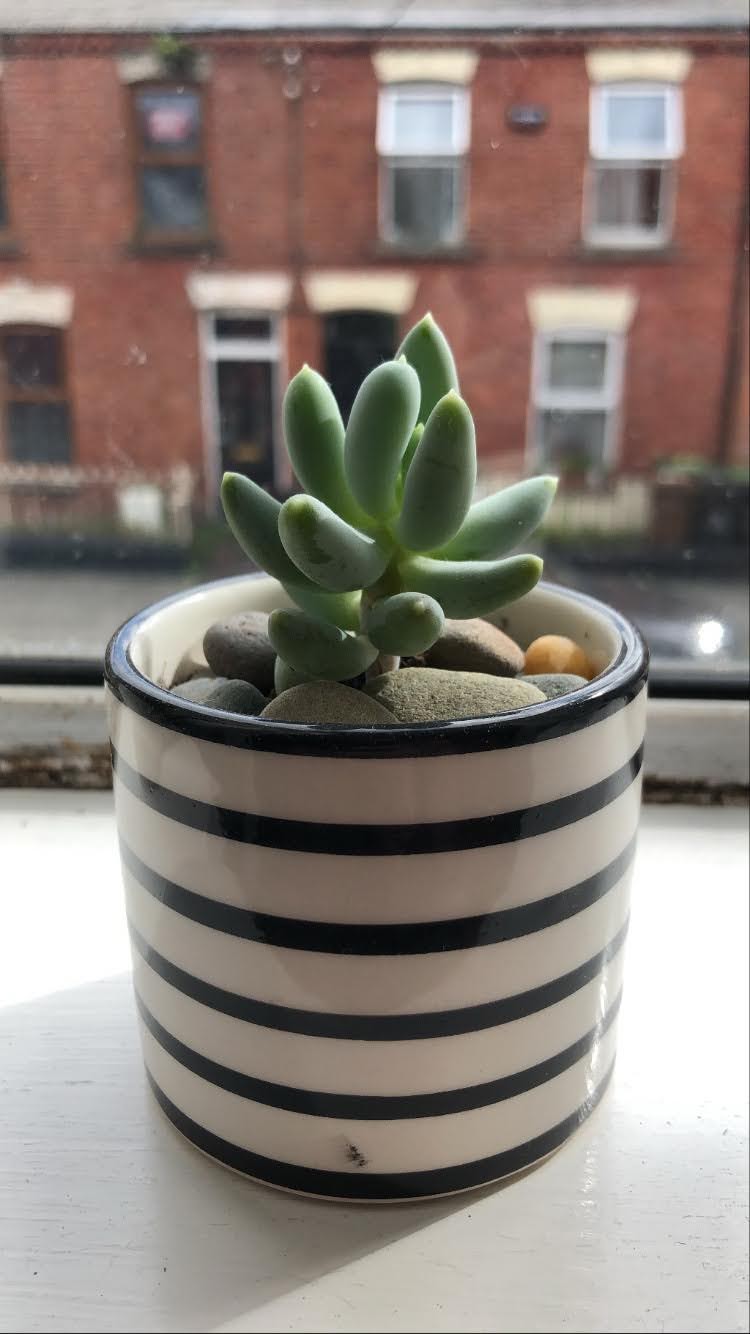
    My jade plant, pictured above, is ever-so-slightly stressed; this comes from placing a plant either in too-strong or too-hot sun, cold, a lack of water, or both. It gets full sunlight for hours in the morning, so as it has flourished this summer, all the margins of the leaves have taken this lovely magenta hue, which comes from a protective compound called anthocyanin.

    In one video I was watching on YouTube, someone said to stop babying your plants, because once they’re a little stressed, they actually become more beautiful, and in fact they grow better. They’re happily stressed. Succulents thrive in the desert because they have the capability to hold onto water during a drought, or protect itself from the sun!

    At the beginning of the lockdown, I mentioned to a friend of mine that the pandemic stress seemed to be bringing out the worst in everyone. He corrected me and said, “No Leslie, it’s bringing out the reality of what’s already inside of people.” And he’s right.

    While obviously everyone right now has less patience, less energy, and less focus than our usual best selves, I think often I am seeing some beautiful effects of stress on the people around me, and maybe even in myself. I find my “stressed” self is a bit quieter and less energetic than usual, but I’m channeling some new growth toward other things.

    The “stressed” version of me is drawing pictures again, which is something I stopped doing at least twenty years ago. I’ve become renewed by this hobby of tending to my gorgeous new houseplants. And suddenly I find myself learning not only new scientific facts and skills, but developing this new theology of houseplants. This blog has been really quiet over the last couple years, and suddenly I’m posting every week!

    In a beautiful and symbiotic way, the more I learn about these plants, the more I learn about life and myself. And I hope that this stress only continues to make me grow more beautifully. We are just as resilient as a succulent on the desert plains; we can thrive in the stress, I know it.

  • Fractals: Theology of Plants

    August 24th, 2020

    I know I’m not the only one finding it hard to concentrate, and this spills over into my spiritual disciplines. In my bible reading lately I’ve been poring over the history books. I’m in 2 Kings, which will be rewarding long-term but can be so painstaking and boring to keep track of who’s who and why these stories were considered significant enough to be put into Scripture. On top of that, I’m finding it really hard to pray as well, and I feel like I only have a mustard seed of faith.

    But despite my feeling of spiritual weakness, God has been teaching me a lot through my plants, my new fascination. And a few days ago I looked at my little jelly beans succulent, or what’s called in Spanish dedos de Dios, or fingers of God, from a different angle, and was so surprised to see that it was actually growing in an orderly and beautiful way.

    From the side it looks completely random and chaotic, though in a charming little way. But in fact, like any succulent, like any plant, like any tree, it grows according to what we can summarize by the mathematical concept of fractals. Plants are in fact the easiest way to understand what a fractal is: a tree trunk splits into two, then those branches split into two more, and on and on, creating the recognizable shape.

    Each plant has its own shape and pattern of branching and leaf placement. It’s truly amazing; even the spacing of trees growing in a forest is orderly and can be measured using fractal geometry, check out this PBS documentary for more details, it blew my mind when I first saw it.

    This is why it’s so hard to make CGI trees look convincing, or even render a CGI forest: it’s infinitely complex, orderly, and mathematical by nature. We really can’t see the forest for the trees! It requires so much time and effort and scientific knowledge to begin to comprehend the complexity and the interconnectedness of life, in just a slice of rain forest, yet forests have always been growing in this way, whether there have been botanists or dendrologists or mathematicians around to observe and measure them.

    It just reminds me that in this year, when things feel meaningless or chaotic, even if I don’t understand what’s going on or how to hope or pray for my future, there is order, there is meaning. And someday I hope the sight and understanding of it takes me by surprise, just like my little dedos de Dios succulent. What an apt name for such a plant!

←Previous Page
1 2 3 4
Next Page→

Blog at WordPress.com.

Privacy & Cookies: This site uses cookies. By continuing to use this website, you agree to their use.
To find out more, including how to control cookies, see here: Cookie Policy
 

Loading Comments...
 

    • Subscribe Subscribed
      • Leslie Flores
      • Join 68 other subscribers
      • Already have a WordPress.com account? Log in now.
      • Leslie Flores
      • Subscribe Subscribed
      • Sign up
      • Log in
      • Report this content
      • View site in Reader
      • Manage subscriptions
      • Collapse this bar