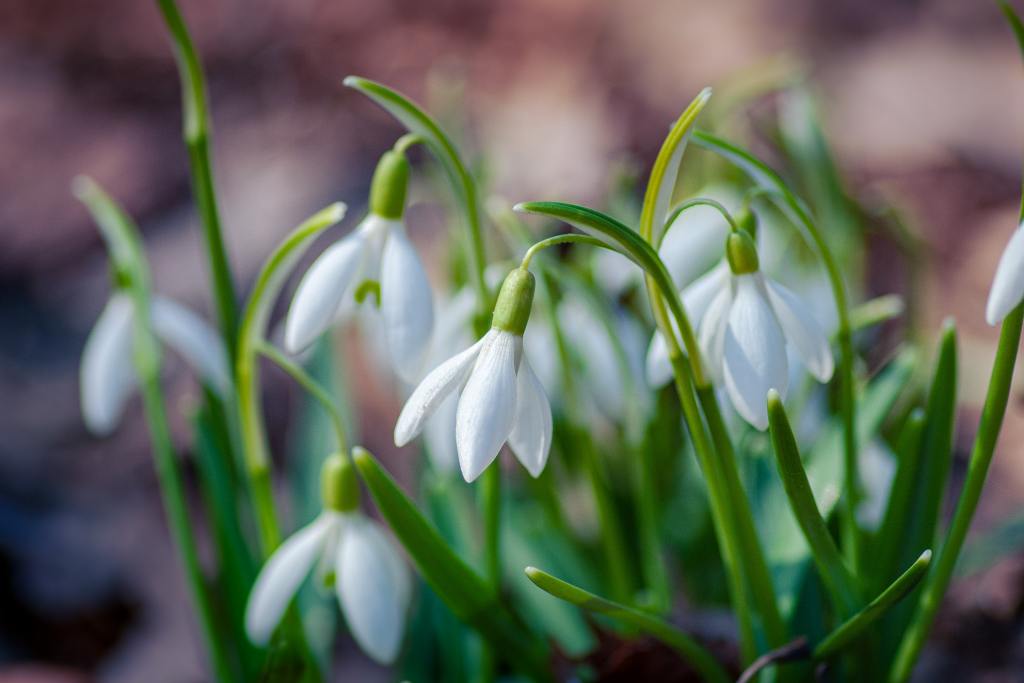
The transition from winter to spring manifests itself completely differently in Ireland, versus here in the semi-arid steppes of the Columbia River Basin. We had over a foot of snow a month ago, and now it is melting away, slowly revealing only mud or flattened, dead yellow grass below. I recently saw someone in Dublin post a photo of snowdrops that had just appeared, and it reminded me of what I was missing. After the years I spent in Dublin, cycling through the seasons, and immersing myself consciously and subconsciously in the Irish way of things, I began to acclimate to the Celtic calendar and the rhythms of nature, which are much quieter and subtler than here in the US. Last week marked the entry into spring with the ancient feast of Imbolc, and St. Brigid’s Day.
Syncretism or Symbolism?
In nature, Imbolc brings the beginning of spring through the beginning of lambing season, the appearance of crocuses and snowdrops, and longer days, among other things. Snowdrops are tiny white flowers on slender, delicate stems, which appear at the end of January, and bring with them a sigh of relief. It brings a joy that reminds us that winter was dark and long and dormant, but that there was something lovely waiting to appear under the black soil, usually sheltered by some tree above.
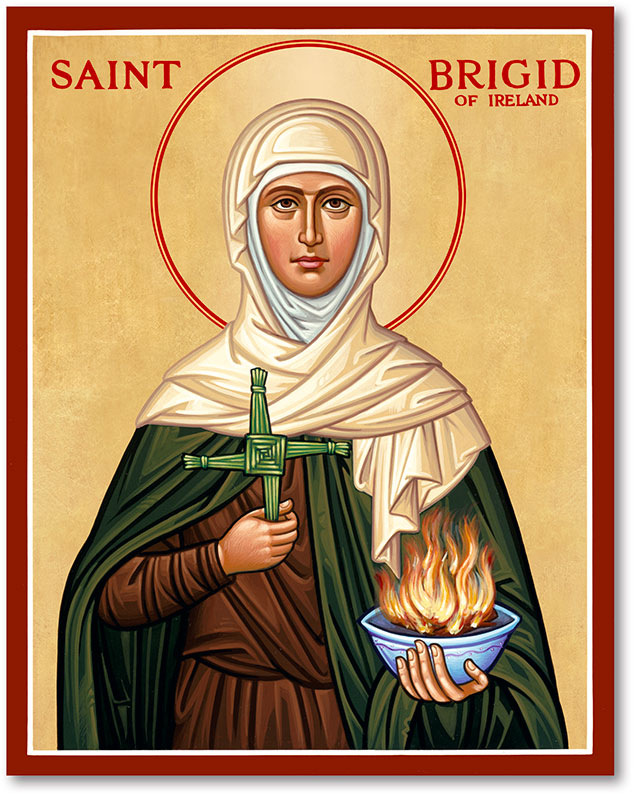
Imbolc is associated with the mysterious figure of St. Brigid, who is attributed with establishing many convents, especially in County Kildare, between the 5th and 6th centuries. She was such an early saint that she is venerated both in the Eastern Orthodox and Roman Catholic church, because she was pre-schism! Brigid’s mother may even have been baptized by St. Patrick himself, making her an extra special figure.
She also has the same name as an Irish spring goddess, whose feast day was originally Imbolc, on February 1st. The goddess Brigid had a druidic shrine in Kildare. A Norman writer in the 12th century described her temple, wherein an eternal, ashless flame was guarded, and apparently no men were allowed to enter. Some scholars think that St. Brigid was a Christianized version of an already existing Celtic tradition, in Imbolc. We’re not even certain Brigid was a real person, and she could function as a composite figure representing several actual Irish Christian female saints, unnamed but roughly from the 5th or 6th centuries.

Hagiographies, or the biographies of saints lives, are delightfully mysterious and not straightforward, but the principles and truths that these compilations communicate are far truer than any accurate historical representation of how they lived. It’s not for us to say what is historical; too much time has passed. But the value in their lives lies not in the exact details, but in understanding what we can learn from these brothers and sisters in Christ. This was the ultimate goal of hagiographers who wrote about important Irish figures like St. Patrick, St. Kevin, St. Brigid, and St. Columcille. They were less historians and more theologians, weaving mysterious elements within that point the reader toward an awe of God and His faithfulness in the saints’ lives. Similarly, just because fairy tales are not “true” doesn’t mean they aren’t true, if you know what I mean. Metaphor and symbol can be much more powerful than direct speech, even for those of us who have seen and do believe in the miraculous, supernatural power of God.
We might call St. Brigid a syncretistic figure, and in missiology we don’t like that; but after living in Ireland so long, the pull of the seasons, the influence of nature and our dependence on her are irresistible reasons to associate a figure like St. Brigid with the beginning of spring. Instead of syncretism, it could be viewed as a redemption of good and natural human celebrations, only viewed through the life-changing power of the resurrection, symbolized, for the Irish, by St. Brigid’s life and ministry. All the more wonderful is the fact that women’s work in the Kingdom of God is routinely celebrated and remembered these past fifteen centuries.
Sacred Seasons and Liturgy
Much in a similar way to how our Christian holidays conform to seasonal celebrations (Christmas right around the winter solstice, Easter vaguely within spring, etc.), our daily and yearly rhythms are the boundaries and limits in which we can best understand and practice our faith. I find myself, even as a Pentecostal, yearning for much more liturgy in church. It orients us to the truth, to God, and our relationship to Him, time and again, especially when our lives look so different after living through a global pandemic.
I don’t know how to explain it, but the changing of the seasons in Ireland feels much more immediate. Spring arrives in the beginning of February, summer in May, and autumn in early September. Something about its northerly latitude and the mild weather means that within a day or two of new seasons, aligned instead to the lunar cycle rather than the solar year, there is a definite shift that occurs. Suddenly, the color of the light changes, as days lengthen after Imbolc, the air seems less oppressively cold, and with the appearance of snowdrops and crocuses, it’s a reminder of just how incredibly fertile the land is, and always was.
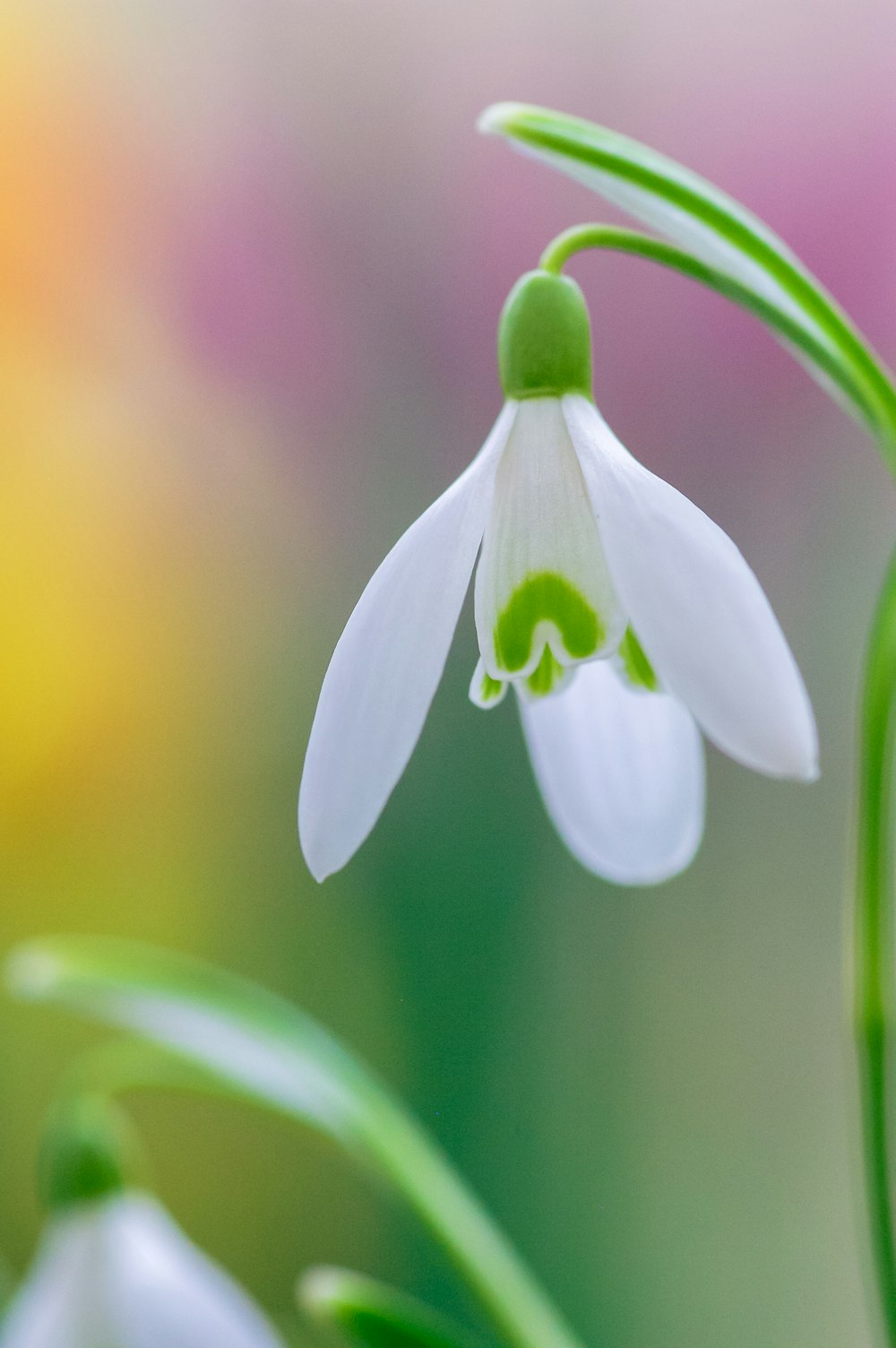
The green persists year-round in Ireland and there is often no snow to melt away, but fresh life and delicate flowers bursting from the ground can bring a joy that I cannot describe, after the doldrums of January pass, and the edge of depression that everyone feels after such long, dark nights. Everyone begins to feel it, and with it, more optimism, and all the chats usually contain the phrase, “Grand auld stretch in the evenings, isn’t there?” (This refers to the increasing stretch of extra daylight in the spring.)
Snowmelt
Lately as I slowly awaken to how much I do miss Dublin, after two months away, and a changing season, spring in a “foreign” place, without snowdrops or St. Brigid’s crosses, feels a little disorienting. Not only am I separate from the community and family I have in Dublin, but the evidence of spring here is just slush and mud, as the snow melts away. I crave that fresh and vibrant Dublin air, potent with humidity and tinged by the mingling of river water and salt air.

As I adjust to life in the US again and see signs of hope and spring emerging far differently and less beautifully than in Dublin, I think of all my peers who have been struggling for years to find some semblance of stability or security in our lives, our careers, our living situations. It is especially precarious for those of us foreigners who lived or still live there, and the unique challenges we face. So many from my generation have seen huge upheavals in our lives; career changes or job losses or moves back home, amid all the other losses and chaos and societal unrest. As I grieve for my old life, I grieve collectively with my friends and my two sisters, who have also lost much in the pandemic.
I don’t recognize my surroundings anymore, and it is confusing and disorienting to yearn inwardly for Irish spring and the dependable changes as this new year progresses, and to be unable to find that. The incipit of spring in 2022 represents something totally new; it represents something very uncomfortable: both hope and ambiguity. As I settle into a new job in a university, preparing for my next chapter as a scholar, still unsure of where I will be living 6 months from now, the slushy snow and mud that is under my feet when I take a walk reminds me that sometimes newness and hope can be a little bit ugly and unappealing.
Yet, hope is still hope, even when it takes on a strange form. We can still sing, like Israel did, even from the ruins.
“Break forth together into singing, you ruins of Jerusalem; for the LORD has comforted his people, he has redeemed Jerusalem.” Isaiah 52:9 NRSV
 Leslie Flores